
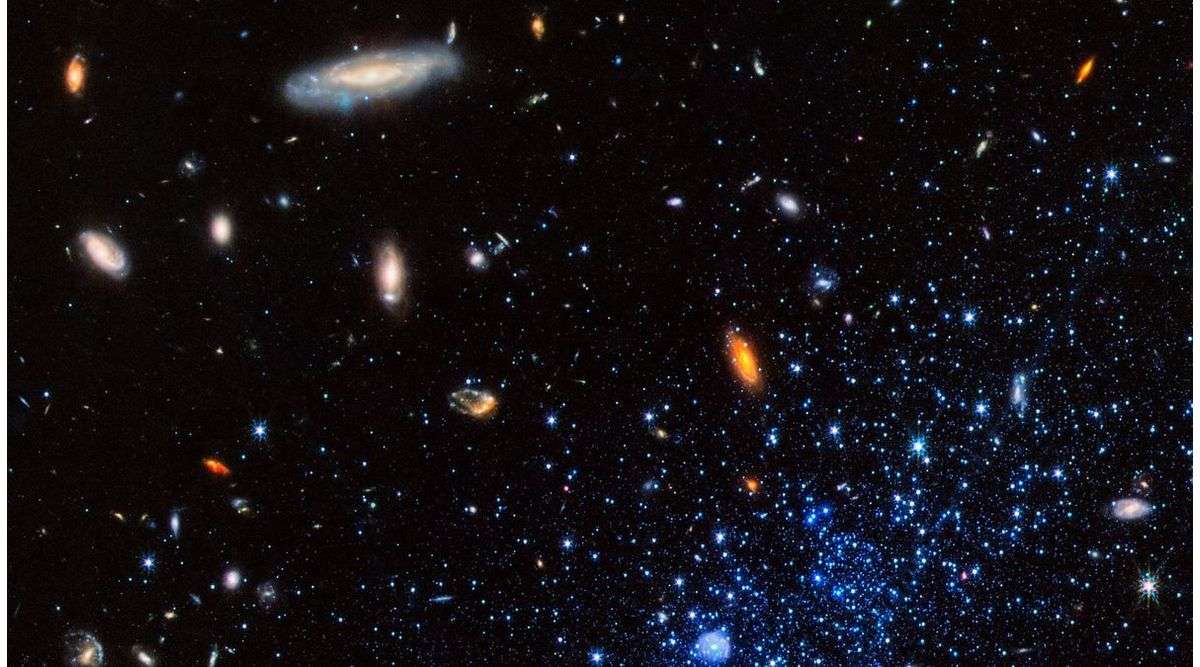
The attention of astronomers worldwide has recently been captured by the enigmatic dwarf galaxy known as Leo P, located a staggering 5.3 million light-years away in the constellation Leo. Discovered in 2013, this so-called ‘pristine’ galaxy is believed to hold secrets about the universe’s early formation and evolution. Its uniqueness is stemmed from its isolation, remaining largely untouched by the gravitational influences of larger galaxies like our own Milky Way. This characteristic makes it a valuable subject for studying cosmic history.
What Makes Leo P Special?
One of the most fascinating aspects of Leo P is its composition. Unlike many galaxies that have evolved significantly over billions of years, Leo P is composed almost entirely of hydrogen and helium. This simplicity allows astronomers to gain insights into the primordial conditions that existed shortly after the Big Bang. For years, the scientific community assumed that small galaxies like Leo P had ceased star formation during a period known as the Epoch of Reionization, which occurred about a billion years after the universe began. Surprisingly, recent observations from the James Webb Space Telescope (JWST) have revealed that Leo P is not only alive but actively forming new stars.
The Revelation from the James Webb Space Telescope
Utilizing its Near Infrared Camera (NIRCam), the JWST has provided unprecedented data about the star formation processes occurring within Leo P. Researchers initially expected that the galaxy had stopped producing stars and would remain in a dormant state. However, JWST’s findings indicate a remarkable revival in star formation, raising questions about the mechanisms that could enable such a resurgence. This unexpected behavior sets Leo P apart from similar isolated dwarf galaxies, where star formation has not resumed once it ceased.
Conclusion: A Gateway to the Past
In summary, Leo P serves as a fascinating case study in the ongoing quest to understand the cosmos. The JWST’s observations are not just about one galaxy but represent a broader narrative about the universe’s history and evolution. As we continue to explore and learn about galaxies like Leo P, we may uncover insights that reshape our understanding of the universe itself. For amateur astronomers wishing to catch a glimpse of these wonders, telescopes like the Celestron NexStar 8SE are excellent tools for observing our cosmic neighborhood. Stay tuned as we unravel more mysteries of the universe, one galaxy at a time.