
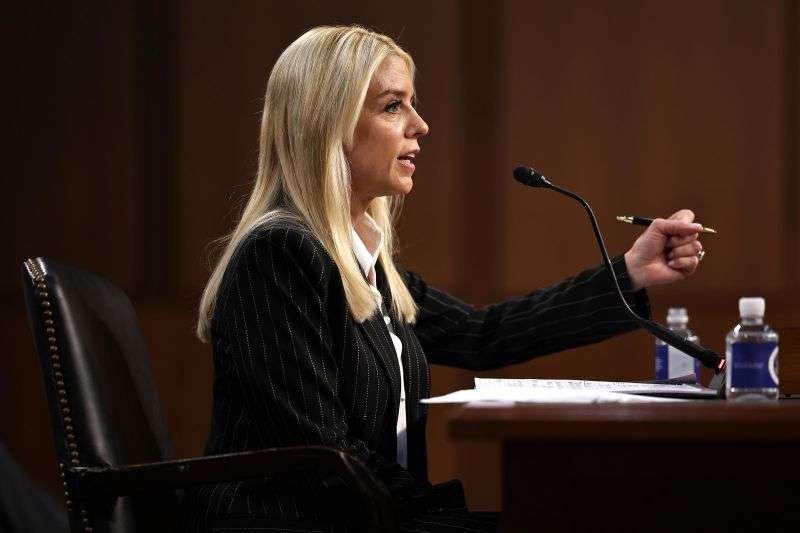
In a closely watched vote, Pam Bondi was confirmed as the United States Attorney General, marking a significant moment for the Justice Department under President Donald Trump. The vote tally was 54-46, largely along party lines, though notable bipartisan support came from Democratic Senator John Fetterman of Pennsylvania. Fetterman said he supported Bondi because she was qualified for the position and acknowledged that perhaps she wasn’t his first choice, but someone in such an important position had to be qualified.
Bondi is a former Florida Attorney General with more than a decade of legal experience under her belt. She has worked on many high-profile cases and has built a reputation as a formidable litigator. Her confirmation comes at a time when the Justice Department is under fire for its past moves, especially concerning investigations involving Trump. In her confirmation hearing, Bondi emphasized her dedication to depoliticizing the Justice Department, indicating that she would focus on crime prosecution and Americans’ protection, not partisan politics.
However, her strong connection with Trump raises a big question about her independence. Many critics believe that her connection to the president would make the justice system politicized, and they might investigate all of Trump’s opponents. In fact, this was echoed by Senator Peter Welch, who believes that loyalty oath would overshadow the integrity of the department. The assurance of Bondi that she would not go for political motivation in her decision-making process made many skeptical.
Bondi has been a major name in the conservative legal sphere all throughout her career. She often aligned with Trump, and it was the support she provided during the 2016 presidential campaign that consolidated her as the most crucial ally. Even after stepping down from the position of Attorney General-she would be the first in that position within Florida-she moved into a lobbying capacity at Ballard Partners, finding the connection with Trump’s administration even more profound. This history brings up valid questions about her impartiality and political motivations that could drive her to act as Attorney General.
Bondi’s appointment to the position is perceived by her followers as much-needed change for a Justice Department they feel has unfairly become politicized against Trump. Senate Majority Leader John Thune praised Bondi’s record, stating that she will aid in the rebalancing of the department toward its central goal of restoring justice. Yet, there is the delicate balancing act between her political relationship and the requirement for impartiality.
In the coming weeks, Bondi will be left with the gargantuan task of working with a department still reeling from the political tremors of the last couple of years. Whether she is to be strictly bipartisan or not is something she’ll have to determine as she meets the on-going investigations and tangled web of politics surrounding the Justice Department. This is something on which the rest of the nation will keep watching closely, while Bondi takes the necessary action to decide what the future American justice would hold.
For this reason, Pam Bondi’s confirmation as Attorney General is a watershed moment, reflecting perhaps the current polarization of politics in the United States and the challenges ahead for the Justice Department. What remains to be seen is whether she will indeed fulfill her promises on fairness and impartiality, or if such external pressures of political allegiance will compromise the integrity of her office.