

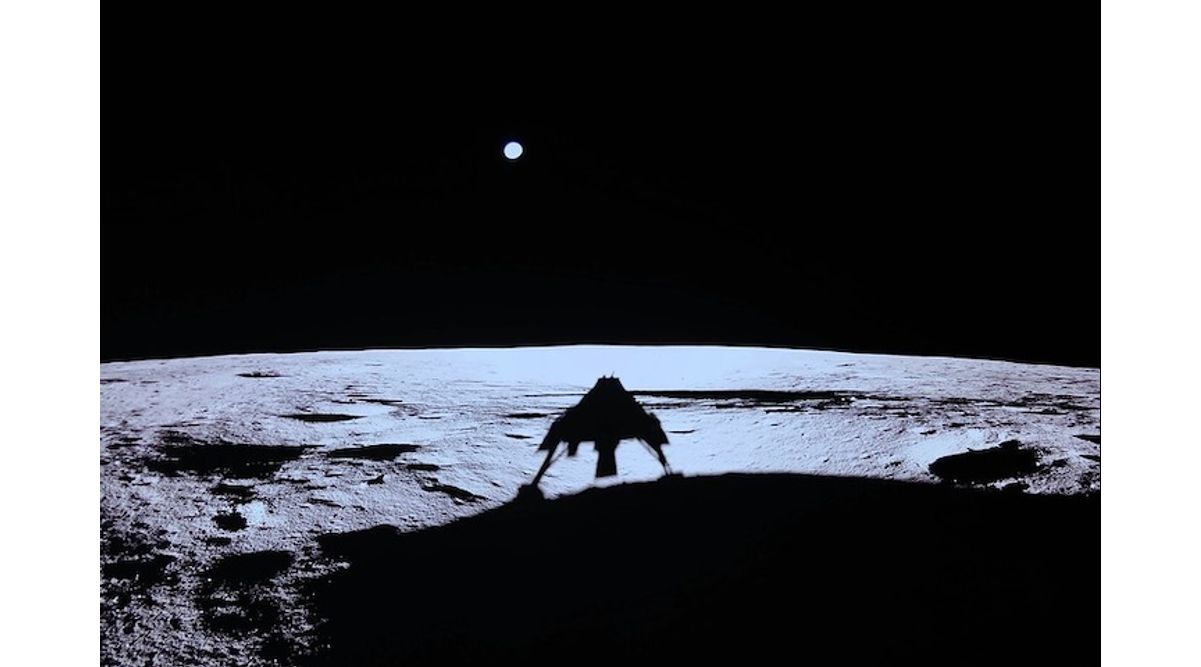
In an era where lunar exploration is being revitalized, Firefly Aerospace’s Blue Ghost lander has made headlines by successfully landing on the Moon and conducting groundbreaking research. This innovative mission, which began on March 2, 2025, aims to unlock the mysteries of the Moon’s interior and its thermal properties.
How does NASA’s LISTER drill measure the Moon’s heat flow?
At the heart of Blue Ghost’s mission is the Lunar Instrumentation for Subsurface Thermal Exploration with Rapidity (LISTER). Developed through the collaboration of Texas Tech University and Honeybee Robotics, this sophisticated pneumatic drill has been at the forefront of scientific exploration. LISTER’s core function is to measure the thermal gradient and conductivity of the lunar surface, providing critical data for understanding the Moon’s geological evolution over billions of years.
The drilling operation has been nothing short of spectacular. As the drill penetrates the lunar surface, it creates small explosive eruptions due to the electrically-charged lunar soil. This unique phenomenon not only showcases the challenges of working on the Moon but also allows researchers to gather valuable temperature measurements at various depths. The aim is to reach depths of 6-9 feet (2-3 meters), which will yield insights into how heat flows through the Moon’s interior.
Why Thermal Properties Matter
Understanding the thermal properties of the Moon is essential for future missions, especially as NASA plans to establish a sustainable human presence on the lunar surface. The data collected from LISTER will help in planning long-duration missions and in selecting suitable sites for future lunar bases. Furthermore, the information gathered can provide insights into the Moon’s geological history, revealing the processes that have shaped its surface over the ages.
Additional Scientific Contributions
Blue Ghost isn’t just about drilling; it carries ten NASA payloads aimed at supporting upcoming human missions under the Artemis program. Among these are the Lunar Magnetotelluric Sounder (LMS) and Lunar PlanetVac. The LMS, equipped with tethered electrodes, is tasked with studying the Moon’s mantle, while Lunar PlanetVac successfully collects and sorts lunar soil, showcasing the versatility of the Blue Ghost mission.
The mission is also a testament to the growing role of commercial entities in space exploration. By being the first commercial lander to achieve a soft landing on the Moon, Firefly Aerospace has set a precedent for future private space endeavors. This collaboration between private companies and NASA is paving the way for a new era of lunar exploration, where science and innovation go hand in hand.
The Road Ahead
As Blue Ghost approaches the end of its mission on March 16, the lander prepares to capture stunning images of the lunar sunset, providing a fitting conclusion to its groundbreaking journey. The data collected during this mission will not only enhance our understanding of the Moon but also serve as a foundation for future explorations, fueling humanity’s quest to explore the final frontier.