

As a space enthusiast, I’ve always been captivated by the incredible advancements in space technology. One company leading the charge in this realm is SpaceX. Their recent launch of the CRS-32 mission to the International Space Station (ISS) not only showcases their technological prowess but also highlights the critical role they play in modern space exploration.
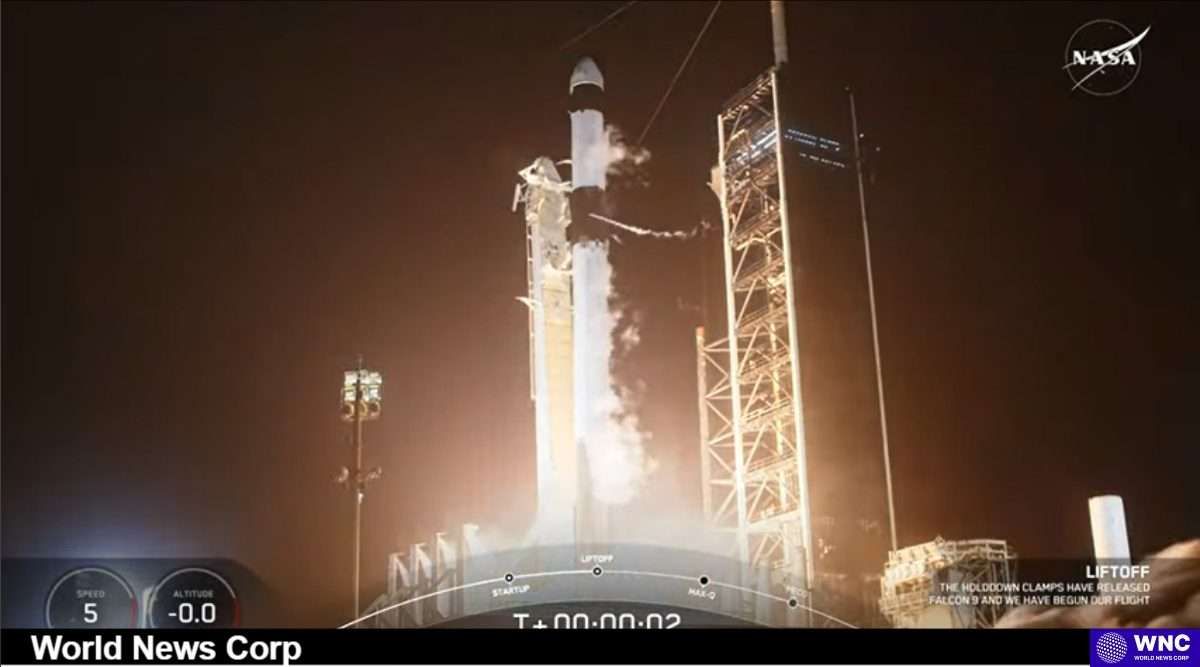
SpaceX conducted its CRS-32 resupply flight early on April 21, 2023, at 4:15 a.m. EDT from the historic Pad 39A at NASA’s Kennedy Space Center in Florida. The Falcon 9 rocket, topped with an uncrewed Dragon cargo capsule, lifted off carrying around 6,700 pounds of cargo. This mission is particularly noteworthy as it marks the 32nd flight SpaceX has performed under a commercial resupply services contract with NASA.
What’s Hidden Inside the Dragon?
So, what exactly does the Dragon capsule carry? According to NASA’s mission description, the cargo includes not only essential supplies and equipment for the ISS crew but also a variety of scientific experiments. For instance, the mission features a demonstration of refined maneuvers for free-floating robots, potentially paving the way for more autonomous operations in space.
Additionally, an enhanced air quality monitoring system is included, aimed at ensuring the safety of future exploration missions to the moon and Mars. Two atomic clocks are also on board to test fundamental physics concepts, such as relativity, and to examine global synchronization of precision timepieces. This blend of practical supplies and groundbreaking science is what makes SpaceX’s missions so vital.
The Significance of Autonomous Docking
One of the most exciting aspects of the CRS-32 mission is the Dragon capsule’s autonomous docking capability. About nine minutes after launch, the Dragon separates from the Falcon 9’s second stage and begins a carefully choreographed series of thruster firings to reach the ISS. This autonomous docking system not only reduces the need for human intervention but also enhances the efficiency of resupply operations. Such advancements are crucial as we prepare for longer missions further into space.
The Road Ahead: Challenges and Innovations
Looking ahead, SpaceX’s role in space exploration is set to expand. With plans for lunar and Martian missions on the horizon, the company is continually innovating. The CRS-32 mission is just one part of a larger puzzle. As we gear up for more ambitious endeavors, the challenges of space travel must be addressed. From developing sustainable life support systems to ensuring the safety of astronauts, the work ahead is monumental.
Moreover, SpaceX is not just focused on resupply missions. The company is also working on the Starship program, aimed at enabling human exploration of Mars. This ambitious project represents a new frontier in space travel, and I can’t help but feel excited about the possibilities it holds.
Conclusion: Why SpaceX Matters
In conclusion, the recent SpaceX CRS-32 launch is more than just a routine resupply mission; it’s a testament to the future of space exploration. The blend of delivering essential supplies and conducting groundbreaking scientific research demonstrates how SpaceX is not only changing the way we think about space travel but also paving the way for future generations of explorers. For anyone interested in the wonders of the universe, keeping an eye on SpaceX’s ongoing missions is essential. We are truly living in an era of exploration, and I can’t wait to see what comes next.