

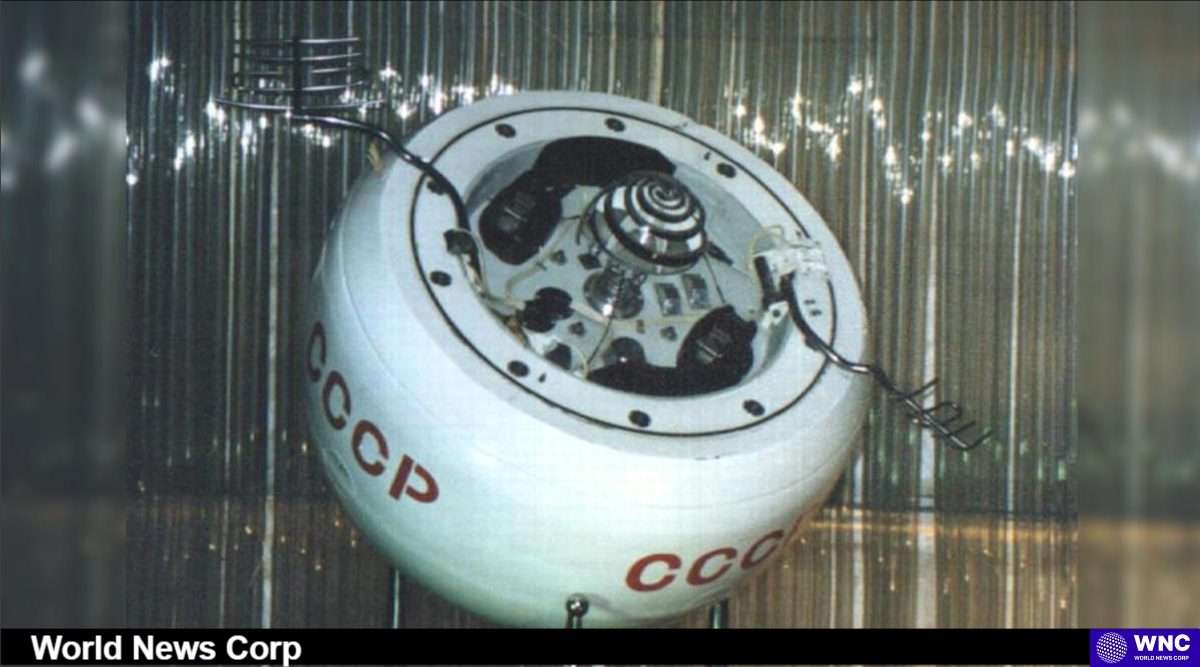
The return of Kosmos 482, a Soviet Venus lander that has been stranded in orbit for over 50 years, has captured the attention of both space enthusiasts and satellite trackers alike. Scheduled for reentry on May 10, the fate of this historical spacecraft raises questions about the implications of its descent back to Earth and the potential for it to survive the journey.
How does a journey through time reveal historical events, cultural shifts, and technological evolution?
Launched in 1972 as part of the Soviet Union’s Venera program, Kosmos 482 was designed to explore Venus. However, an anomaly during launch left it in a low Earth orbit instead. Over the decades, atmospheric drag has slowly drawn the spacecraft closer to Earth, and now, its time is nearly up. Dutch satellite tracker Marco Langbroek has been closely monitoring the probe’s trajectory and predicts that the reentry will occur with a significant degree of uncertainty, plus or minus 20.6 hours.
What Makes Kosmos 482 Unique?
Unlike many other pieces of space debris, Kosmos 482 is not just any piece of junk; it is a lander designed to withstand the extreme conditions of Venus’s atmosphere. This design raises the intriguing possibility that the spacecraft may survive its reentry through Earth’s atmosphere intact. Langbroek believes that the lander could impact the Earth as a single object, unlike other satellites that might break apart and scatter debris.
Eyes on the Skies: Tracking the Reentry
Satellite trackers like Ralf Vandebergh have already begun capturing high-resolution images of Kosmos 482. With the spacecraft currently situated about 80 miles closer than operational Starlink satellites, the imagery is revealing fascinating details. Vandebergh notes, “Several frames seem to confirm that there is a compact ball, but some frames show a weak elongated structure that could potentially be the parachute.”
The potential for a parachute to deploy remains questionable, with Langbroek expressing skepticism about its operational status after more than five decades. The spacecraft’s age and the trajectory of reentry will greatly influence whether or not it can make a soft landing.
What Will Happen When It Hits?
If Kosmos 482 does make it to Earth’s surface, it is likely to do so at speeds of about 150 mph. The kinetic energy at impact could be comparable to that of a small meteorite fragment. However, due to its sturdy construction, the risks associated with its descent are significantly lower than the risks posed by larger, multi-piece objects that often disintegrate upon reentry.
A Splashdown or a Landfall?
With its orbital inclination of 52 degrees, the reentry trajectory places Kosmos 482 within a large swath of Earth, including both land and sea. Given that oceans cover about 70% of the Earth’s surface, the odds favor a splashdown rather than a landfall. This is a relief for those concerned about potential impacts on populated areas.
Conclusion: A Moment of Reflection
As we await the return of Kosmos 482, it’s a moment to reflect on our space exploration history. This spacecraft is a remnant of an era filled with ambition and curiosity about the cosmos. Whether it survives reentry or splashes down into the ocean, Kosmos 482 serves as a reminder of our quest for knowledge beyond our planet. Stay tuned as satellite trackers continue to provide updates leading up to this historic event.