
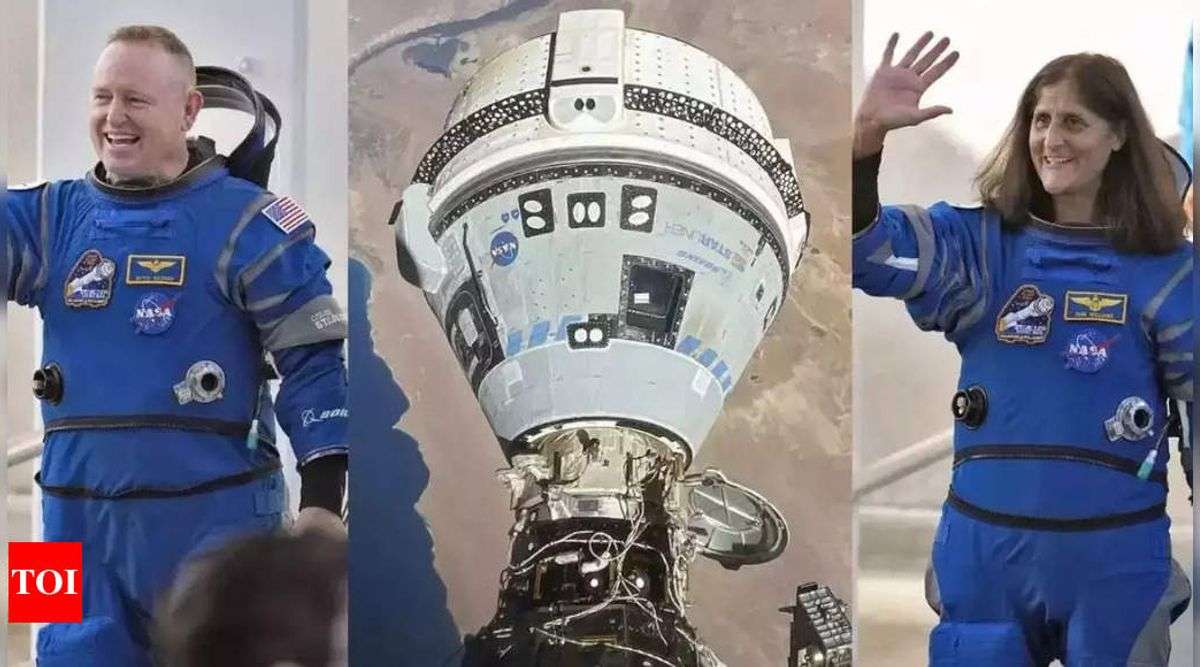
As March 19, 2025, approaches, Indian-origin astronaut Sunita Williams and her colleague Butch Wilmore are preparing up for return to Earth after spending over eight months aboard the International Space Station (ISS). Their journey home has been delayed due to technical issues with Boeing’s Starliner spacecraft, initially meant to expedite their return. Now, as they prepare to touch down, they face the daunting challenge of readjusting to Earth’s gravity—a reality that poses significant physiological hurdles.
The effects of long-duration spaceflight on the human body are profound and well-documented. In microgravity, astronauts like Williams and Wilmore experience a range of changes. For instance, fluids redistribute throughout the body, causing what is often referred to as ‘puffy face syndrome.’ Upon reentry, their bodies will need to readjust rapidly, leading to potential dizziness and discomfort from swollen legs as fluids settle back into the lower extremities. As Butch Wilmore candidly put it, ‘Gravity is really tough, and that’s what we feel when we get back.’
Muscle atrophy and bone density loss are other significant concerns. Without the need to support their body weight, astronauts can lose 1-2% of their bone mass each month while in space. This loss can lead to long-term health issues, making the rehabilitation process crucial. NASA has prepared an extensive program to help Williams and Wilmore regain their strength. This program includes physical therapy focusing on rebuilding muscle strength and mobility through supervised exercises.
Additionally, cardiovascular conditioning will play a vital role in their rehabilitation. In microgravity, the heart does not have to work as hard, which can lead to weakening over time. Therefore, workouts on treadmills and stationary bikes will be essential to ensure that their cardiovascular health is restored. Nutritional support is also a key component; specialized diets rich in calcium and vitamin D will help counteract bone loss and support overall recovery.
Emerging research is also looking into ways to mitigate the effects of microgravity on astronauts. A recent study from Johns Hopkins University suggests that jumping exercises could play a role in preventing cartilage damage and maintaining bone strength during long missions. The implications of this research extend beyond just the current mission of Williams and Wilmore; as space agencies prepare for future missions to Mars and the Moon, addressing cartilage degradation will be a priority.
As Williams and Wilmore count down to their return, the journey back to Earth is more than just a physical transition. It is a testament to human adaptability and resilience. The rigorous rehabilitation process that awaits them is designed to not only address the immediate challenges posed by gravity but also to prepare them for their next adventures—both on the ground and in the cosmos. Their story serves as a reminder of the complexities of human physiology and the ongoing quest to conquer the challenges of space travel.