

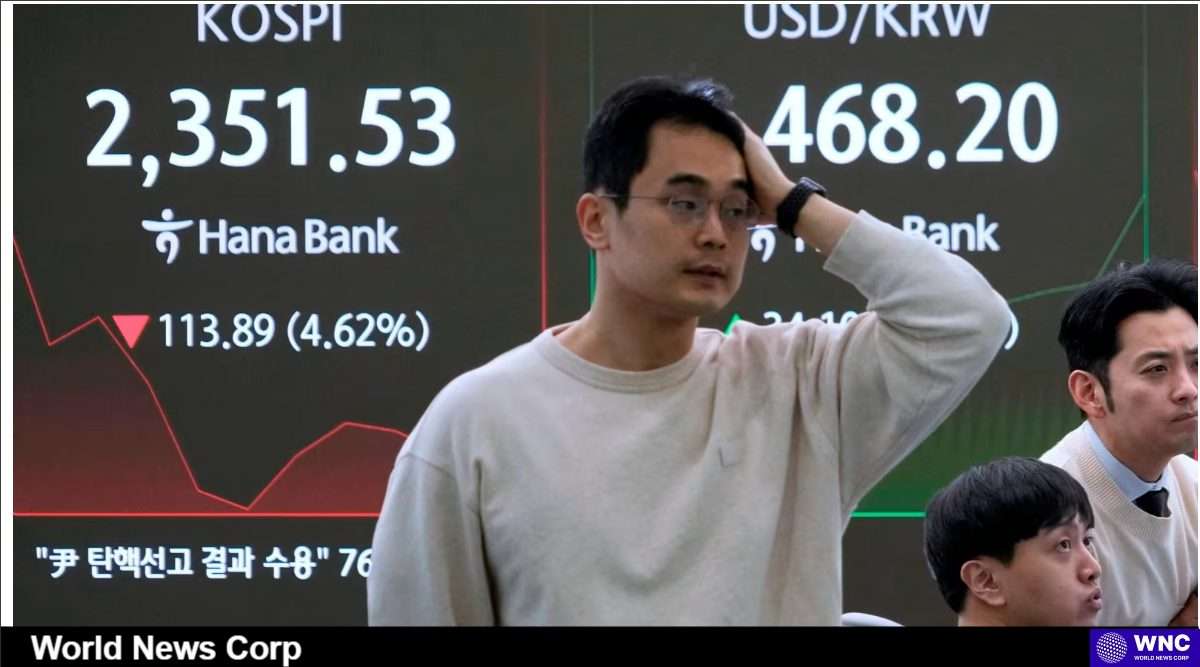
The recent stock market turmoil is a stark reminder of how interconnected our global economy is. As tariffs imposed by the Trump administration ripple through international markets, investors are left grappling with uncertainty. The immediate reaction has seen Asian markets plunge, with indices like Japan’s Nikkei 225 and Hong Kong’s Hang Seng experiencing significant losses. This turmoil is not just a blip on the radar; it could set the stage for a prolonged economic downturn.
How do tariffs impact stock markets?
When President Trump announced sweeping tariffs, the markets reacted violently. In just two days, over $5.4 trillion was wiped off global equity values. This sharp decline raises critical questions about the sustainability of a trade war and its implications for investors. With the S&P 500 flirting with bear market territory, many are left wondering how low it can go.
Real-World Examples: The Asian Market Collapse
Take a closer look at the Asian markets to understand the broader impact. Japan’s Nikkei fell nearly 8% at the opening bell, while Australia’s S&P/ASX 200 dropped over 6%. This is not merely a regional issue; it reflects a growing sentiment of fear among global investors, who are concerned about the potential for a recession. The interconnectedness of these markets means that what happens in one region can have far-reaching consequences.
Inflation and Consumer Prices: The Hidden Costs
The effects of these tariffs extend beyond stock market fluctuations. According to the Tax Foundation, the average American household could see an increase of $2,100 annually due to rising import taxes. This surge in prices can lead to inflation, affecting everything from groceries to electronics. As companies pass on these costs, consumers will feel the pinch in their wallets, leading to decreased spending and potentially dragging down economic growth.
Looking Ahead: Strategies for Investors
So, how should investors navigate this tumultuous landscape? Diversification is key. By spreading investments across various asset classes, one can mitigate risk. Moreover, keeping an eye on which sectors are more resilient during downturns can provide opportunities to capitalize on market rebounds. For instance, industries like healthcare and utilities tend to perform better in uncertain economic times.
Conclusion: The Road Ahead
As we move forward, it’s crucial to stay informed and adaptable. The tariffs have created a unique situation that requires vigilance and strategic planning. While the current climate may be daunting, history shows that markets do recover. By understanding the implications of these policies and adjusting our strategies accordingly, we can weather the storm together.