

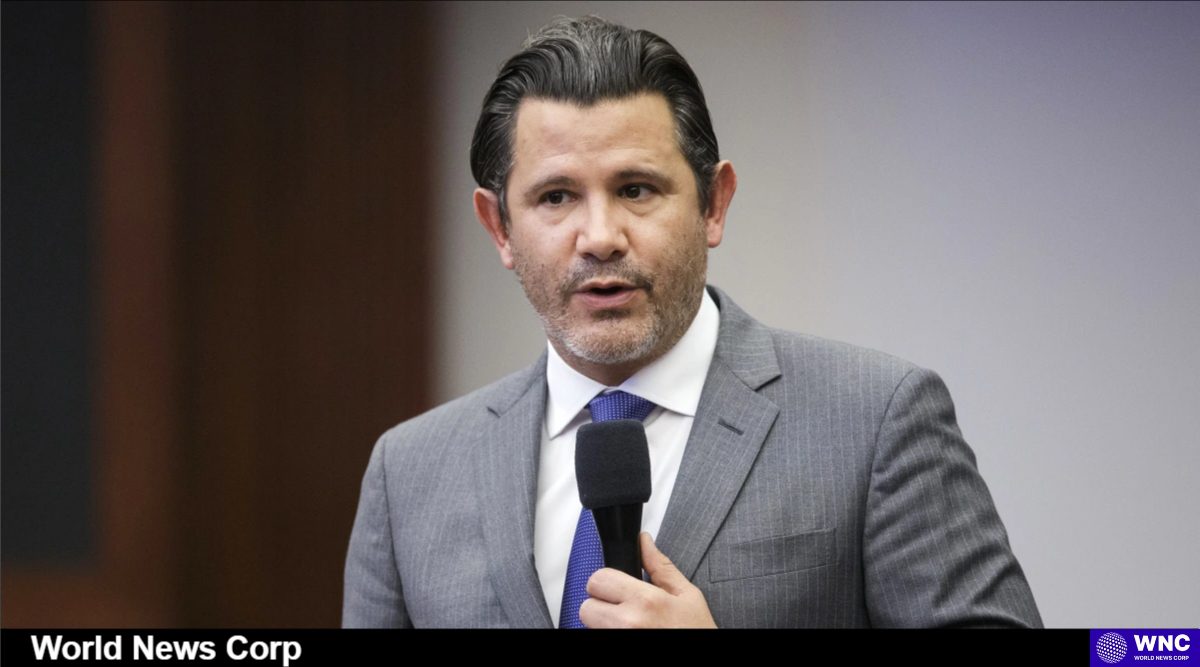
In an unexpected turn of events, Florida State Senator Jason Pizzo has announced his departure from the Democratic Party, marking a significant moment in the state’s political landscape. As the Democratic minority leader, Pizzo’s announcement on the Senate floor that he is changing his voter registration to ‘no party affiliation’ raises questions about the future of the Democratic Party in Florida.
What Drove Jason Pizzo’s Departure?
Pizzo’s words were striking: ‘The Democratic Party in Florida is dead.’ This declaration is not merely a personal sentiment; it reflects a growing sentiment among various political observers and party members. Pizzo’s decision to leave comes after months of internal struggles, power dynamics, and a sense of disillusionment with the party’s direction. By distancing himself from the Democratic label, Pizzo believes he can operate more freely, unencumbered by party politics. He stated, ‘I think stripping myself of the title of the party designation allows me to run free and clear, clean and transparent and help many, many more.’
Impact on the Democratic Party
Nikki Fried, chair of the Florida Democratic Party, responded immediately to Pizzo’s announcement, labeling him as ‘one of the most ineffective and unpopular Democratic leaders in recent memory.’ This comment highlights the fractures within the party and the varying perceptions of leadership effectiveness. Fried’s assertion that the party is now ‘more united without him’ suggests that Pizzo’s departure could lead to a new chapter for Democrats in Florida, one that could potentially revitalize their efforts in the state.
Historical Context and Current Climate
Pizzo’s exit is not an isolated incident. Over recent months, several Democrats, including state representatives Susan Valdes and Hillary Cassel, have switched to the Republican Party. This trend raises alarms about the viability of the Democratic Party in Florida. With approximately 1.2 million more registered Republicans than Democrats and a growing number of voters identifying as independent, the Democratic Party faces significant challenges in capturing the electorate’s support.
The Road Ahead: Can the Democrats Rebuild?
Looking ahead, Pizzo has not ruled out a gubernatorial run, indicating that he may still play a role in Florida’s political landscape, albeit outside the Democratic framework. His comments about the political system resembling the ‘infighting, power struggles, corruption, and decline of civic virtue’ that led to the fall of Rome suggest that he sees a broader issue at play in Florida politics. This perspective may resonate with voters who feel alienated by traditional party politics.
The question remains: Can the Democratic Party in Florida navigate these turbulent waters and emerge stronger? It will require a re-evaluation of strategies, a commitment to unity, and a focus on attracting independent voters who currently hold considerable sway in the state.
In conclusion, Jason Pizzo’s departure from the Democratic Party is a significant event that could reshape the political landscape in Florida. Whether it serves as a wake-up call for Democrats or merely highlights existing fractures remains to be seen. However, one thing is clear: the political dynamics in Florida are changing, and both parties must adapt to survive.