

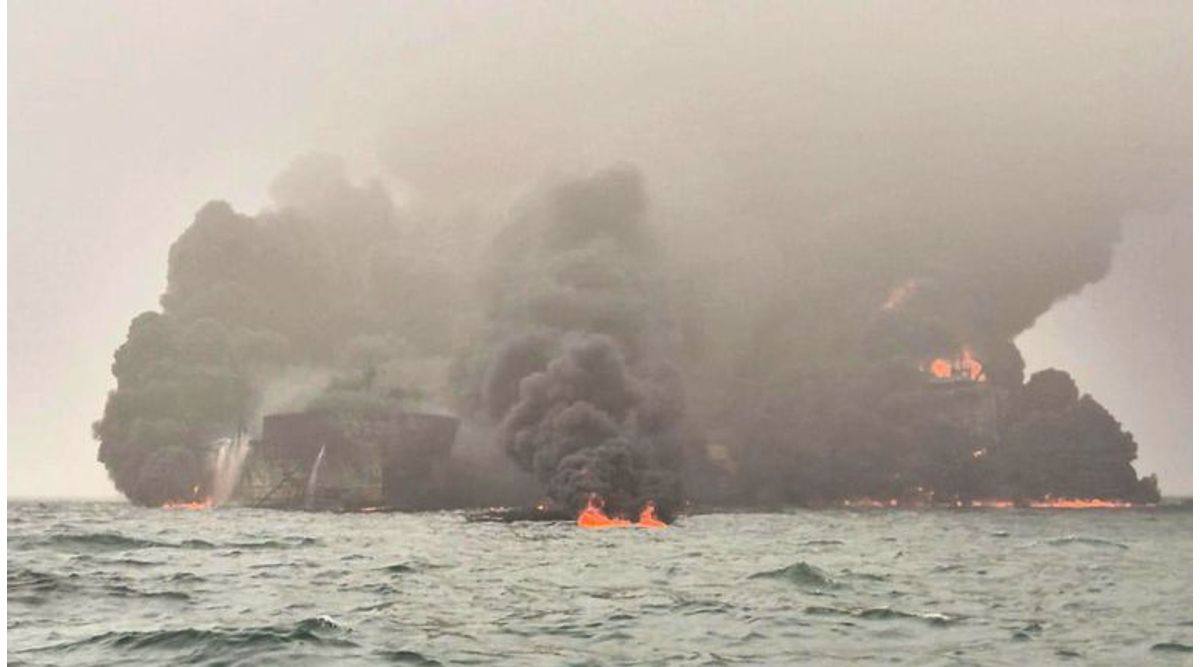
In a shocking turn of events, an oil tanker, the MV Stena Immaculate, collided with the cargo vessel Solong in the North Sea, sparking a significant emergency response. This incident, which occurred on a foggy morning, has raised serious concerns about the environmental impact and safety regulations in maritime navigation. Witnesses report hearing multiple explosions and seeing a massive fireball as jet fuel began spilling into the sea.
What happened in the North Sea, and how did it impact the environment, economy, and geopolitical relations?
The collision took place around 10:00 GMT, approximately 13 miles off the coast of East Yorkshire. The Stena Immaculate, a US-flagged oil tanker carrying jet fuel, was reportedly anchored at the time and sustained a ruptured cargo tank after being struck by the Portuguese-flagged container ship Solong. Emergency services rushed to the scene as the fire engulfed the tanker, with crews from multiple towns dispatched to rescue the crew members who were forced to abandon ship.
More than 30 crew members were brought to safety, with one reported hospitalized. Local MP Graham Stuart confirmed that all but one crew member from both vessels are safe and accounted for. However, the potential ecological disaster unfolding in the North Sea has prompted immediate responses from environmental agencies, including Greenpeace UK, which stated that it was too early to determine the full impact of the spill.
The Environmental Concerns
The ecological implications of such an incident cannot be overstated. Oil spills have historically wreaked havoc on marine life, as seen in past disasters like the Torrey Canyon spill in 1967, which led to the deaths of thousands of seabirds. Experts warn that the type of oil and the speed of the response are crucial in mitigating environmental damage. Jet fuel, while less persistent than crude oil, can still have toxic effects on marine life and can ignite, posing additional risks.
As cleanup efforts begin, organizations like the Cleethorpes Wildlife Rescue committee are mobilizing to prepare for potential wildlife rescues. They are adapting their oil spill protocols and setting up hotlines for reporting affected animals. The urgency of this situation has led to calls for a unified command structure to ensure an effective response involving government agencies, local authorities, and environmental groups.
What’s Next for Maritime Safety?
The incident raises critical questions about maritime safety regulations. David McFarlane, a maritime risk and safety consultant, pointed out that human error is often a factor in maritime collisions. With modern navigational systems, including radar and automatic identification systems, there are protocols in place to prevent collisions. However, this incident highlights the need for continuous improvement and stringent adherence to safety measures in the shipping industry.
As the investigation unfolds, the Marine Accident Investigation Branch has deployed a team to gather evidence and assess the situation. It is essential to understand the cause of this collision to prevent similar incidents from occurring in the future.
Conclusion: A Call for Action
In summary, the collision between the MV Stena Immaculate and the Solong is more than just a maritime accident; it is a wake-up call for the shipping industry and environmental agencies. With the potential for significant ecological damage, it is crucial that we learn from this incident and take steps to ensure maritime safety and environmental protection. The eyes of the world will be watching as rescue operations continue and investigations commence, hoping for the best outcome for both the crews involved and the delicate marine ecosystems at risk.