

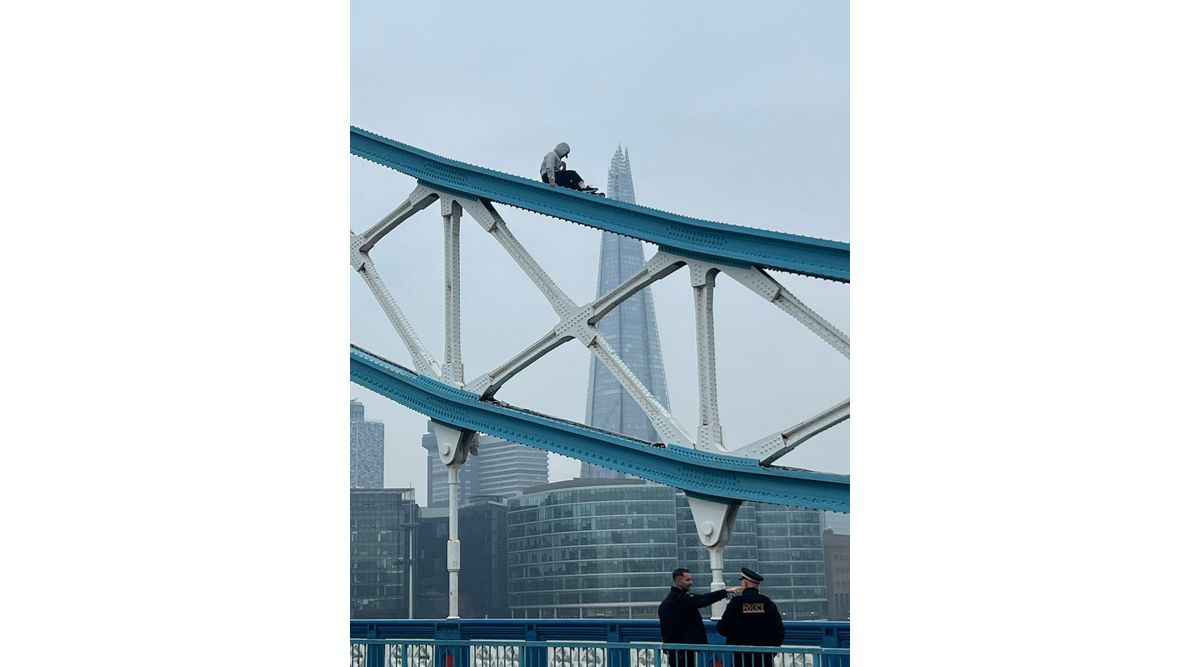
On a typically bustling Monday morning in London, an incident unfolded that halted traffic and drew the attention of emergency services. A man scaled the iconic Tower Bridge, a feat that caused significant disruption across the city. This incident, which began around 10:40 AM, led to the temporary closure of the bridge, forcing police to respond swiftly to ensure public safety. By 12:20 PM, the man was safely brought down, but not before chaos ensued on the roads below.
What were the immediate consequences of the incident, and how did they impact safety, response efforts, and public perception?
As news of the man’s climb spread, traffic congestion quickly piled up. Commuters found themselves stuck in long queues stretching back to Limehouse and Aldgate. Buses, including the 42, 78, and 343, were diverted, compounding the travel woes for many. A London Fire Brigade spokesperson confirmed that firefighters were on-site, ready to assist the police in bringing the situation to a safe conclusion. Eyewitnesses described the scene as surreal, with one remarking, “This dude just chilling on Tower Bridge right now. Traffic and boats all disrupted.”
A Closer Look at Tower Bridge
Tower Bridge, completed in 1894, is not only a vital transportation link but also a symbol of London’s rich history. Its unique design and beautiful views make it a popular spot for both tourists and locals. However, this incident serves as a reminder of the vulnerabilities faced by such landmarks. The bridge has seen its fair share of events over the years, but scaling it raises significant questions about safety and security measures in place. How did this man manage to climb such a prominent structure? What protocols are in place to prevent similar occurrences in the future?
Traffic Disruptions: More Than Just Tower Bridge
While the Tower Bridge incident was unfolding, the Blackwall Tunnel was also shut down due to a separate lorry crash. This double whammy caused extensive delays across London’s roadways. Traffic monitoring sites reported heavy congestion, with motorists experiencing delays of up to three hours. For many, their morning commute turned into a test of patience and resilience. With both the Tower Bridge and Blackwall Tunnel closed, the ripple effects on local traffic were felt throughout the city.
The Role of Emergency Services
Emergency services played a critical role in managing the situation. The City of London Police, alongside the London Fire Brigade, responded promptly to the incident, ensuring that the man was safely brought down without harm. This cooperation between agencies showcases the importance of a well-coordinated emergency response plan, particularly in a city as large and complex as London. The swift action taken may have prevented further chaos and ensured public safety.
Reflecting on Public Safety and Future Measures
As we reflect on this incident, it raises pertinent questions about public safety around major landmarks. What measures can be implemented to deter individuals from attempting similar actions? Increased surveillance, security personnel presence, and public awareness campaigns may be essential steps in safeguarding these iconic structures. Londoners and visitors alike should be able to enjoy the beauty of landmarks like Tower Bridge without the fear of unexpected disruptions.
In the end, while the man who scaled Tower Bridge posed a challenge for emergency responders, the resolution was handled effectively. The bridge reopened, and traffic began to flow again, but the memory of that dramatic morning will linger in the minds of those caught in the chaos. Moving forward, it’s crucial for authorities to address these vulnerabilities and ensure the safety of both residents and tourists in this vibrant city.