

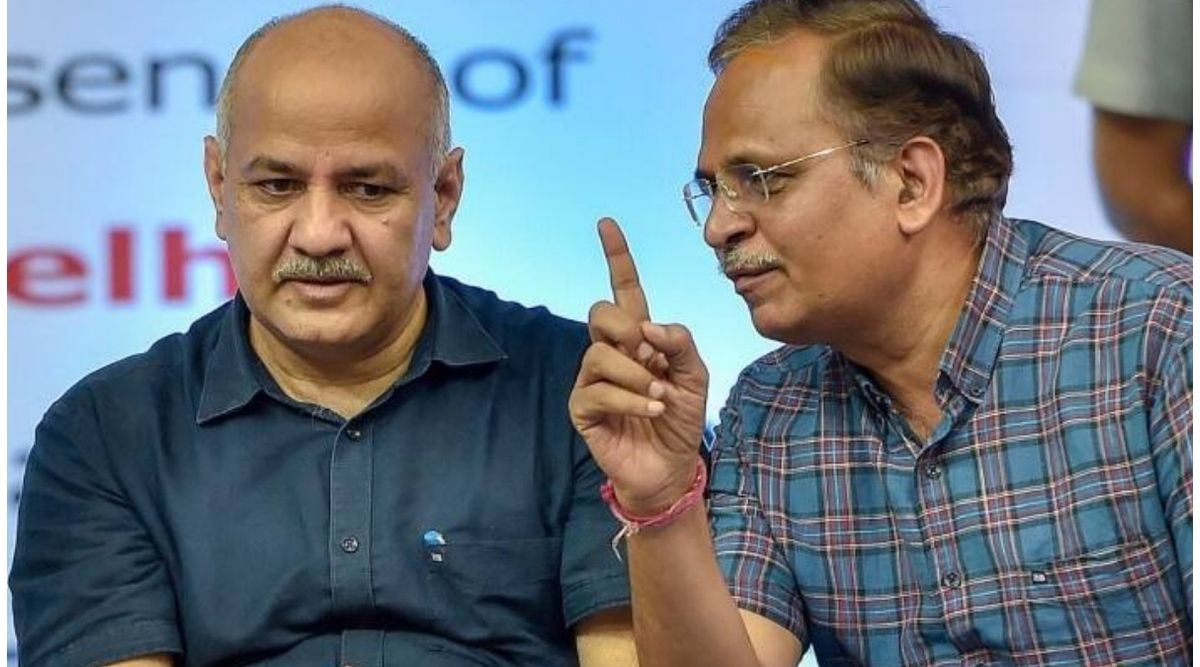
In a significant development, the approval for the registration of an FIR against Aam Aadmi Party (AAP) leaders Manish Sisodia and Satyendar Jain has been granted by President Draupadi Murmu. This action stems from allegations of a staggering ₹2000 crore classroom scam linked to the construction of classrooms in Delhi government schools. The controversy has sparked a political uproar, with Sisodia’s recent remarks drawing attention from both supporters and opponents alike.
The Political Storm: What Sparked the Controversy?
The controversy began when the Central Vigilance Commission (CVC) revealed gross irregularities in the construction of over 2,400 classrooms by the Public Works Department (PWD). The CVC’s report, dated February 17, 2020, highlighted serious lapses that raised eyebrows across political circles. In light of these findings, the Delhi government’s Vigilance Directorate recommended an investigation into the matter back in 2022. The subsequent approval from the President, under Section 17A of the Prevention of Corruption Act, has revived discussions on corruption in governance.
Sisodia’s response to the allegations was both defiant and colorful. He likened the political landscape to a festival of colors, suggesting that while some were painting their lives black, he and his party would continue to spread vibrant colors. This metaphorical statement reflects not only a defense but also an attempt to shift the narrative. However, it also raised eyebrows among political analysts who noted the peculiar timing and nature of his comments.
The BJP’s Reaction
The Bharatiya Janata Party (BJP) has seized upon the allegations as a significant opportunity to criticize the AAP. BJP leaders have echoed sentiments that the “black color” of corruption has overshadowed Delhi’s governance for the past decade. They argue that the people of Delhi have suffered under the leadership of Arvind Kejriwal, Sisodia, and Jain. BJP spokesperson Praveen Khandelwal asserted that the truth of their alleged misdeeds would soon come to light as investigations progress. This rhetoric not only serves to rally their base but also aims to paint AAP as corrupt and untrustworthy in the eyes of the public.
The Broader Implications of the Investigations
With the investigations now gaining momentum following the MHA’s consent, the political landscape in Delhi is poised for turbulence. Sisodia, previously the Deputy Chief Minister, has already faced legal challenges, including his arrest in a separate liquor policy case. Jain, too, is under scrutiny for alleged money laundering, raising questions about the accountability of leaders in the AAP.
The AAP has countered these allegations by accusing the BJP of orchestrating a political witch-hunt. Senior AAP leader Saurabh Bhardwaj criticized the BJP for its lack of interest in fulfilling promises made to the people of Delhi, asserting that their sole agenda is to suppress dissent and target political rivals. This narrative of victimization is common in political discourse, but it raises critical questions about the integrity of democratic processes and the role of governance.
Conclusion: A Complex Political Landscape
As the investigations unfold, it remains to be seen how the political dynamics will shift. The AAP is likely to continue portraying itself as a victim of political maneuvering, while the BJP will aim to solidify its position by emphasizing accountability and transparency in governance. For the citizens of Delhi, this political drama is not just about allegations; it is a reflection of their hopes and aspirations for a government that prioritizes their welfare over political gamesmanship. As we watch this situation develop, what becomes clear is that the intersection of politics and governance will continue to be a focal point of public discourse in the coming months.