

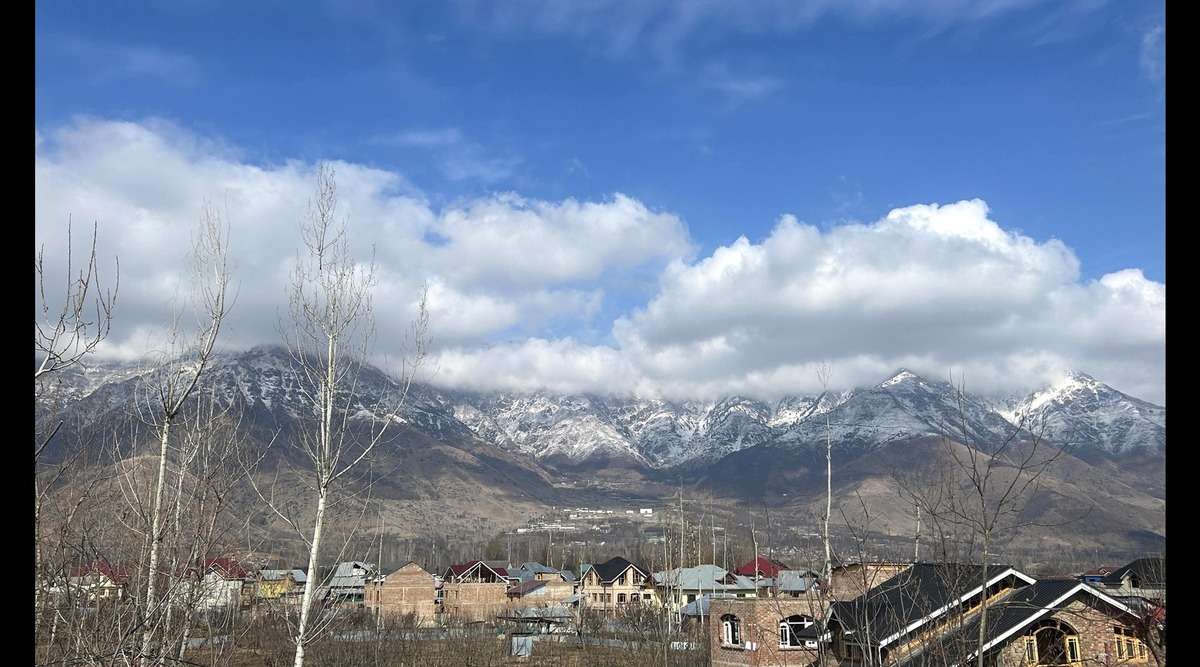
Srinagar, the summer capital of Jammu and Kashmir, has recently experienced a welcome shift in its weather patterns. After facing severe drought-like conditions, the region saw light to moderate rain and substantial snowfall over the past few days. This change has not only provided relief to the local populace but has also begun to rejuvenate the iconic natural resources of the area, particularly the Achabal spring.
The Meteorological Department reported that snowfall was particularly heavy in the higher reaches, with notable measurements in various locations. For instance, Banihal received a snowfall depth of 15 cm, while Pahalgam and Bhaderwah recorded 13 cm and 9 cm respectively. These conditions have helped mitigate the adverse effects of the winter drought that had plagued the region, with precipitation levels significantly below average until now.
The weather forecast for the coming days indicates a continuation of this trend. According to MeT director Mukhtar Ahmad, the weather will remain clear until the afternoon of February 25, after which the region could expect moderate to heavy rain and snowfall. This is particularly crucial as the Jhelum River and other local water bodies have been suffering from critically low water levels, attributed to a staggering 80% deficit in precipitation this winter.
As a result of the recent rainfall, we can already see a positive impact on water levels across the valley. The rejuvenation of the Achabal spring, a vital source of drinking water for the local community, has been especially noted. An official from the Jal Shakti department reported that the water supply lines in major areas have seen significant improvements. This revitalization of local water bodies not only supports drinking water needs but also plays an essential role in agricultural irrigation, crucial for the region’s economy.
The community is understandably relieved as they witness the transformation brought on by the weather changes. Farmers in the region are hopeful that the incoming moisture will lay a foundation for better crop yields in the upcoming seasons. The weather forecast suggests that the period from February 25 to 28 will be generally cloudy with intermittent light to moderate rain and snow. Isolated heavy showers may also occur, further enhancing the prospects for agricultural recovery.
In conclusion, the recent weather developments in Srinagar are a blend of challenges and opportunities. While the rain and snow have come as a relief to the people of Kashmir, they also highlight the region’s vulnerability to climate variability. As we move forward, an understanding of how these weather patterns affect local ecosystems and communities will be essential for sustainable development and resource management in the region.