

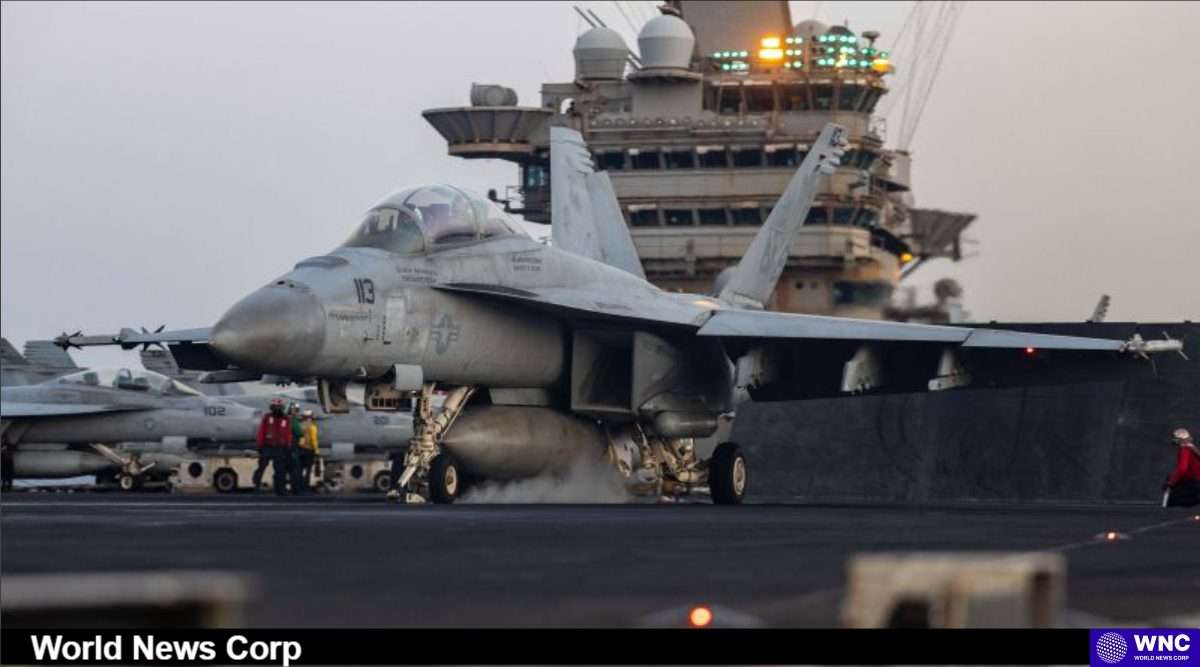
Recently, the USS Harry S. Truman has found itself in the headlines due to a series of unfortunate incidents involving its fighter jets. Just over a week ago, an F/A-18F Super Hornet was lost in the Red Sea after a failed landing attempt. The incident occurred when the arrestment wire, crucial for slowing down the aircraft during landing, failed to engage. This led to the jet crashing into the sea, prompting the pilots to eject and subsequently be rescued with minor injuries.
The loss of the F/A-18F is the second incident in just over a week. The first jet also went overboard under different circumstances. Initial reports indicated that the Truman made a hard maneuver to evade potential Houthi fire, leading to the aircraft being lost. These incidents raise questions about the operational challenges faced by the Truman and its crew.
What is the role of the USS Harry S. Truman in regional security?
The USS Harry S. Truman is a key player in the U.S. Navy’s strategy in the Middle East, particularly in the Red Sea, where it has been actively involved in airstrikes against Iran-backed Houthi forces in Yemen. With a high-stakes mission, the Truman carries significant responsibility, but it also faces escalating threats. The Houthi rebels have repeatedly targeted U.S. naval assets in the region, complicating operations and increasing the risks to personnel and equipment.
Understanding the Technical Failures
What exactly led to these technical failures? The recent incidents highlight the critical importance of effective maintenance and operational procedures on aircraft carriers. The Navy has not provided specific details regarding the mechanical issues that contributed to the jet’s failure to land safely, but investigations are underway. Incidents like this remind us that even in the most advanced military operations, human factors and mechanical failures can have significant consequences.
The Cost of Military Assets
Each F/A-18 fighter jet comes with a hefty price tag, often exceeding $60 million. The loss of two jets in such a short period not only impacts the mission capability of the Truman but also represents a substantial financial blow to the U.S. military. This raises an important question: how does the military balance operational readiness with the risk of losing expensive equipment?
Navigating Geopolitical Tensions
The situation is further complicated by the geopolitical landscape. President Donald Trump announced a ceasefire with the Houthi rebels shortly before the recent attack on the Truman, creating a confusing backdrop for military operations. Understanding the motivations of the Houthi forces and their relationship with Iran is essential for U.S. strategy moving forward. As a journalist, watching the interplay of military operations and international diplomacy can be both alarming and fascinating.
Conclusion: A Call for Improved Safety Measures
As we look ahead, it is crucial for the Navy to enhance safety measures and protocols to prevent future incidents. The experiences of the USS Harry S. Truman should serve as a lesson for all military branches. By prioritizing aircraft maintenance and crew training, the Navy can work to mitigate risks and ensure that its personnel return safely from their missions. The stakes are high, and the eyes of the world are watching.