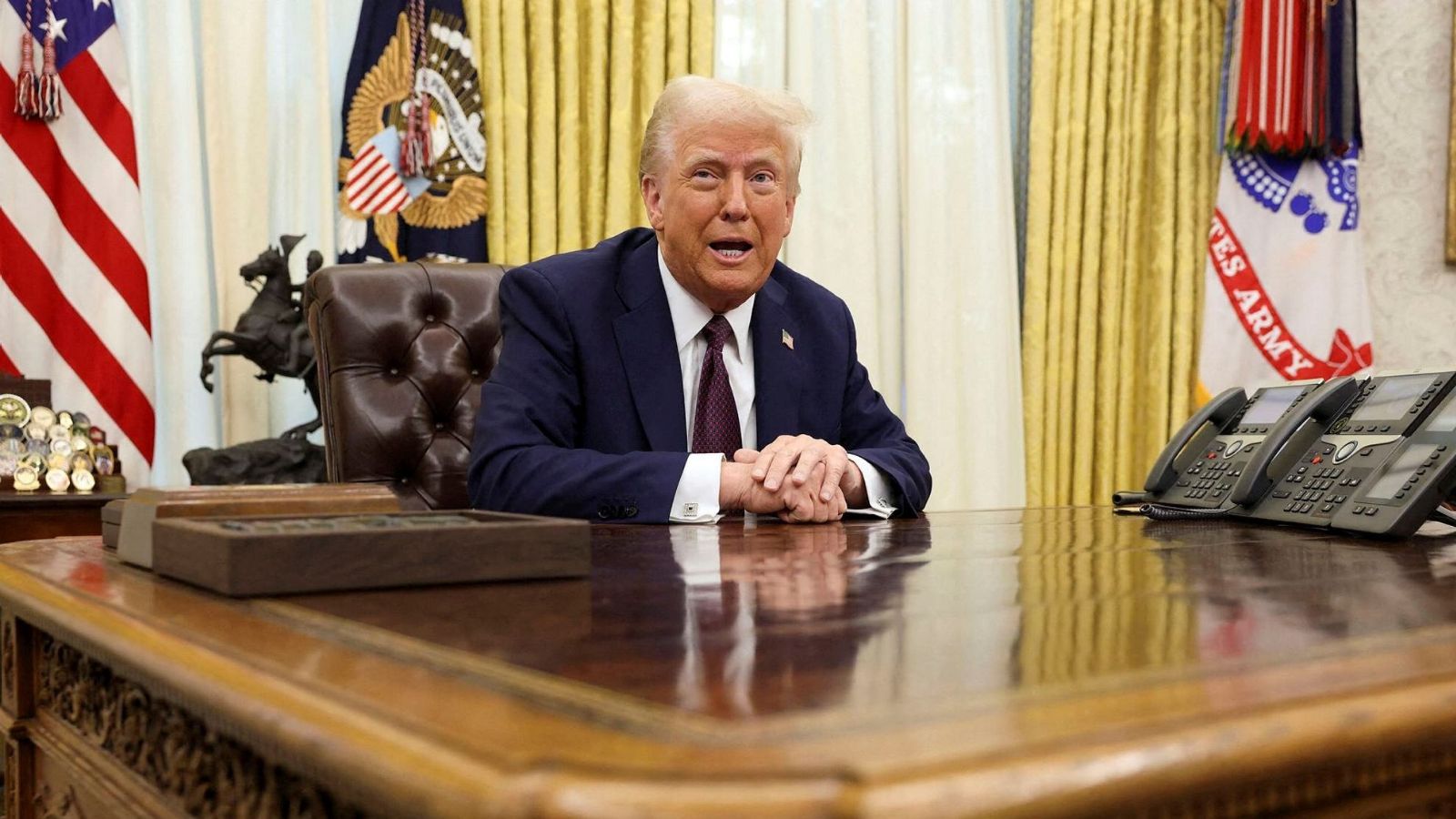
In a dramatic move that has rocked the financial world, the President of the United States, Donald Trump, has signed an executive order banning the establishment and issuance of Central Bank Digital Currency (CBDC) within the United States borders. This directive is destined to herald a decentralized economy for digital assets, with the private sector driving its development. The implications of this order run deep not only for the United States but for the digital currency world at large.
CBDCs are a new form of digital currency issued by central banks. Unlike cryptocurrencies, which are decentralized and not controlled by any single entity, CBDCs are essentially digital forms of a nation’s fiat currency. Countries like China, Brazil, and Sweden have been actively exploring the implementation of CBDCs, aiming to streamline their financial systems and enhance transaction efficiency. However, Trump’s executive order clearly opposes this trend by pointing out risks in terms of privacy and financial stability.
The Vision of a Private-Sector Driven Digital Economy
The order not only bans CBDCs but also promotes the growth of dollar-backed stablecoins, which are considered safer. Therefore, a strong digital asset ecosystem led by the private sector will be encouraged by the administration to make the United States dominate the global financial markets. Because stablecoins promise to work outside governmental control, an exciting alternative to CBDCs arises, ensuring the U.S. dollar is at the center of a decentralized digital economy.
The Cryptocurrency Working Group
The presidential working group dedicated to the development of a federal regulatory framework for digital assets shall be created for this purpose. This will be tasked not only with regulation but also assessment into the feasibility of having a national digital asset stockpile. It marks Trump’s continued pledge on the promise to establish a strategic Bitcoin reserve during his campaign. Currently, the U.S. government holds a sizeable amount of Bitcoin, worth over $20 billion, which can be used as a starting point for this reserve.
Innovation vs. Regulation
While the order of Trump aims at innovation in the digital asset space, it also provokes questions of balance between regulation and the principles of decentralization. As the cryptocurrency market develops, ensuring that regulations are not overly restrictive will be crucial to maintaining an environment conducive to growth. The working group is tasked with identifying regulatory changes that could alleviate burdens on innovation while ensuring consumer protection and market stability.
Global Implications of Trump’s Executive Order
On the international level, this executive order may trigger a competitive dynamic between countries pushing for CBDCs and the U.S. strategy of promoting private sector alternatives. As nations like China advance their CBDC initiatives, the U.S. focus on stablecoins and decentralized digital assets may redefine its role in the global economy. This approach not only aims to safeguard American financial interests but also positions the U.S. as a leader in the digital finance revolution.
Real-World Examples of Digital Asset Adoption
Several businesses have already started adopting stablecoins as a means of transaction, demonstrating their viability as a payment solution. Companies like Circle and Coinbase are at the forefront of this movement, facilitating transactions that reflect the growing acceptance of cryptocurrencies. Furthermore, the prominence of Bitcoin in the financial ecosystem is continuously rising, as evidenced by its increasing legitimacy and adoption among institutional investors.
Conclusion: The Future of Digital Assets in the United States
The executive order issued by Trump is a great shift for the U.S. concerning digital currencies. Banning CBDCs and advocating for a private sector-controlled digital asset ecosystem, the administration is laying down the groundwork for a new era of financial technology. As we move through these changes, it will be important to track how this landscape evolves and what it means for consumers, businesses, and the global economy. The balance between innovation, regulation, and decentralization will be critical to the future of digital assets in the United States.