

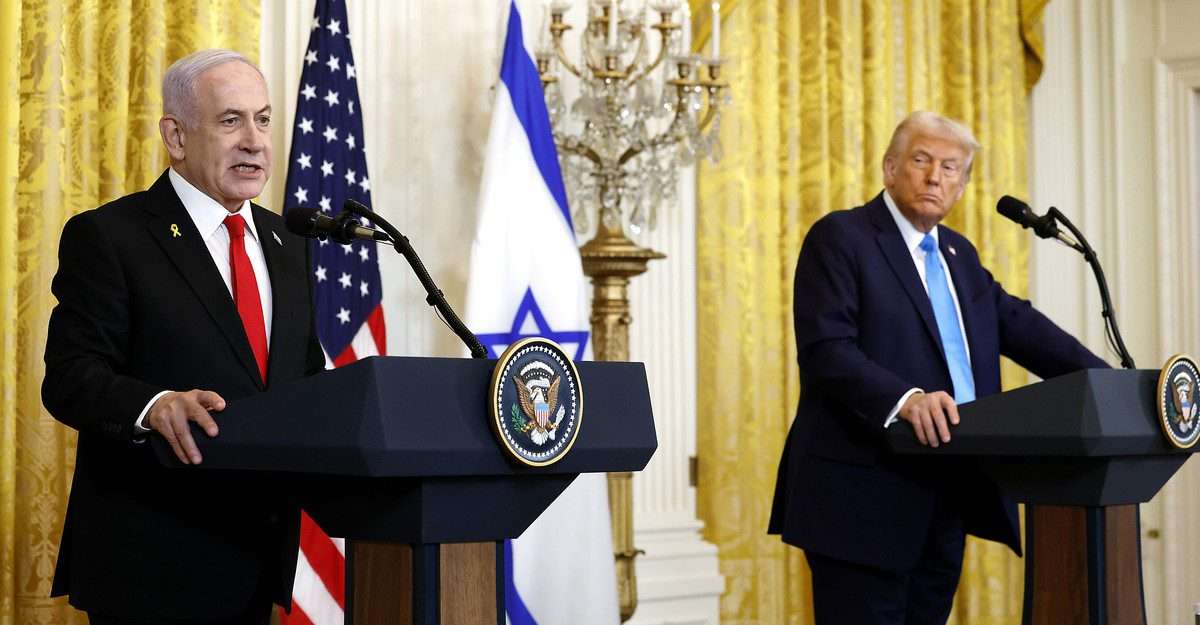
In recent months, the Gaza Strip has become a focal point of international discourse, especially with former President Donald Trump proposing a bold and controversial plan for its future. Trump’s vision includes the potential deployment of U.S. troops to the region, with a long-term goal of an American-led redevelopment initiative. But what does this mean for the Palestinians and the geopolitical landscape of the Middle East?
What is the Gaza Strip?
The Gaza Strip is a small territory situated on the eastern coast of the Mediterranean Sea, bordered by Israel and Egypt. It is inhabited by about 2.2 million Palestinians and has been the center of conflict for decades. The area has witnessed many military confrontations, especially between Israel and Hamas, which have led to severe humanitarian crises. Therefore, understanding the historical context of the Gaza Strip is important before delving into Trump’s recent proposals.
Is Trump’s proposal a new approach?
Recent words from President Donald Trump in a news conference with Israeli Prime Minister Benjamin Netanyahu suggested that the U.S. should take ownership of the Gaza Strip and redevelop it. He called the area the potential “Riviera of the Middle East,” envisioning this area as prime real estate. This proposal raises eyebrows, not only for its audacity but also for its implications on national sovereignty and the right to self-determination for the Palestinian people.
The Reaction to Trump’s Vision
Trump’s statements have been highly criticized by many groups. His plan is considered a move to remove more than 1.8 million Palestinians, which should be permanently resettled outside their homeland. The idea has been widely condemned by Arab states, including Saudi Arabia, which has rejected any attempts to displace Palestinians. This action, the critics argue, might worsen the already fragile Middle East, a region which had seen a two-state solution aimed at promoting decades of peace building.
Historical Perspective
Historically, the Gaza Strip had been a disputed territory in dispute, ownership of it had changed hands many times. The country was occupied by Egypt until 1967 when Israel seized and occupied it during the Six-Day War. Since then have been violence, talks, and failure of agreements: President Trump’s proposal to directly take control of Gaza raises the question of international law and the rights of Palestinians, who have long been seeking recognition and autonomy.
The Implications of U.S. Military Involvement
Trump has not excluded the possibility of sending U.S. troops to aid in the rebuilding of Gaza. Many political analysts and lawmakers have expressed alarm at the idea, believing that the military presence would likely escalate tensions rather than stabilize the region. The concept of U.S. troops patrolling a territory with such a complex history raises ethical and strategic concerns about foreign intervention in areas of protracted conflict.
The Road Ahead
The implications on U.S. foreign policy arising from the discourses on Trump’s Gaza vision are profound and far-reaching, for if actually implemented, such a plan can redefine the whole relationship between the U.S. and Israel in relation to the Arab world at large. Equally important is the fact that it may influence the international approach to conflict resolution. The most important thing will be to remain sensitive to Palestinian rights and aspirations.
Conclusion
Therefore, Trump’s controversial vision for the Gaza Strip is all sided-historical, ethical, geopolitical dimensions. The idea of turning Gaza into a thriving region might not be so unbearably unattractive, but the realities of today- displacement, sovereignty, and human rights cannot be turned a blind eye to. Thus, in the future, it is very important that dialogue between all interested parties does not target peace, stability, and respect for dignity.