
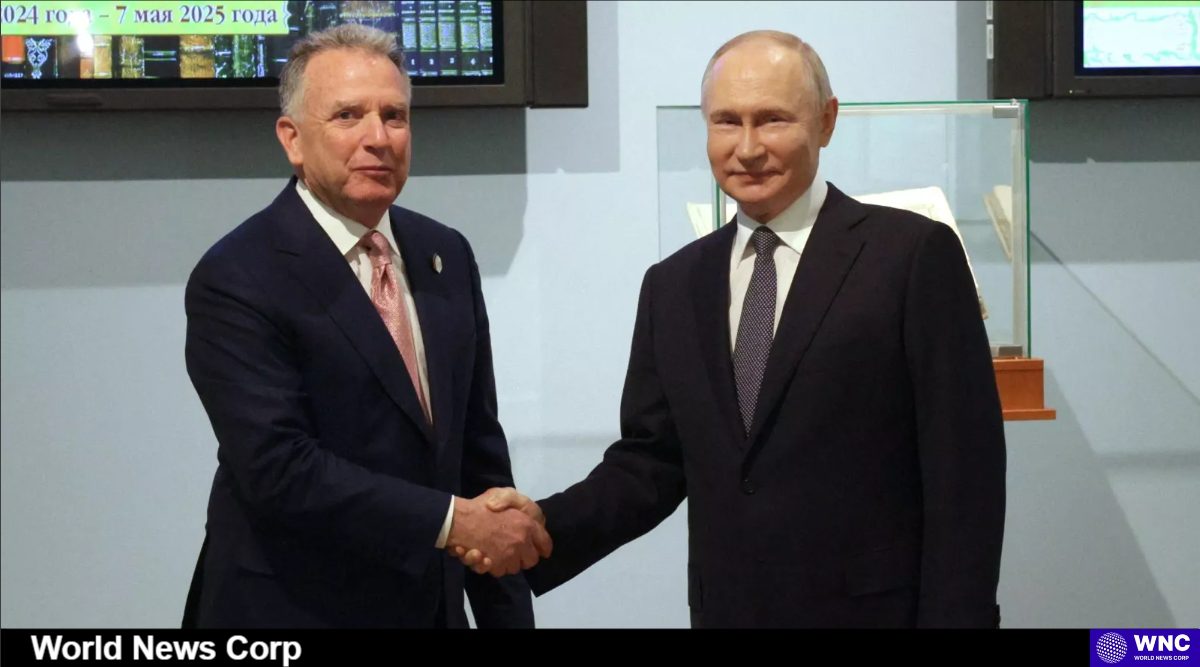
In the ever-evolving landscape of international relations, the ongoing conflict between Ukraine and Russia stands as a critical focal point. Recent diplomatic engagements, particularly the meeting between U.S. envoy Steve Witkoff and Russian President Vladimir Putin, underscore the intricate dynamics at play. This encounter, which lasted over four hours, was positioned as a significant step towards addressing the 'aspects of a Ukrainian settlement.'
Witkoff's discussions with Putin are not new; they mark his third meeting this year. The Kremlin described these talks as 'productive,' indicative of a cautious optimism that has been lacking in previous dialogues. However, political rhetoric from figures like former President Donald Trump complicates the narrative. Trump has publicly urged Putin to expedite efforts towards a ceasefire, expressing frustration over the ongoing violence. 'Too many people are dying, thousands a week, in a terrible and senseless war,' he stated, highlighting the urgent human cost of the conflict.
Meanwhile, Keith Kellogg, Trump's envoy to Ukraine, ignited controversy with remarks suggesting the possibility of partitioning Ukraine. His comments were quickly clarified on social media, where he insisted his intent was to discuss a post-ceasefire resiliency force rather than advocating for a division of the country. This incident reflects the delicate balance of communication and miscommunication that often plagues diplomatic efforts.
On another front, European nations have pledged €21 billion in military aid to Ukraine, signaling a united effort to bolster Kyiv's defenses. During a meeting of European defense ministers, the consensus was clear: there are no signs of an imminent end to the war. The looming question remains—how can diplomatic channels effectively contribute to peace?
As the world watches, Ukraine's President Volodymyr Zelensky has called out the Kremlin for allegedly prolonging the conflict. During a visit to his hometown of Kryvyi Rih, he laid flowers in memory of the victims of a recent missile attack. Zelensky's assertions that Chinese nationals are fighting alongside Russian forces add another layer of complexity to the geopolitical landscape. 'Russia is clearly trying to prolong the war even by using Chinese lives,' he remarked, stressing the need for more robust air defense systems to protect Ukrainian lives.
Simultaneously, Trump has positioned himself as a potential peacemaker, claiming he could resolve the conflict within 24 hours. His recent statements underscore a growing impatience with the lack of progress in negotiations, further complicating the diplomatic chess game. As he lamented, 'A war that should have never happened, and wouldn't have happened, if I were President!'
As we delve into the intricacies of these diplomatic maneuvers, it's essential to recognize that every dialogue has its implications. The meetings between U.S. and Russian officials continue to occur, indicating a willingness to engage. However, the path to peace remains fraught with challenges. The recent prisoner swap between the two nations highlights a possible thaw in relations, albeit a tentative one.
In summary, the U.S.-Russia relationship is at a pivotal juncture, with diplomacy playing a crucial role in shaping the future of the Ukraine conflict. As envoys meet and discussions unfold, the world watches closely, hoping for a resolution that prioritizes peace and stability.