

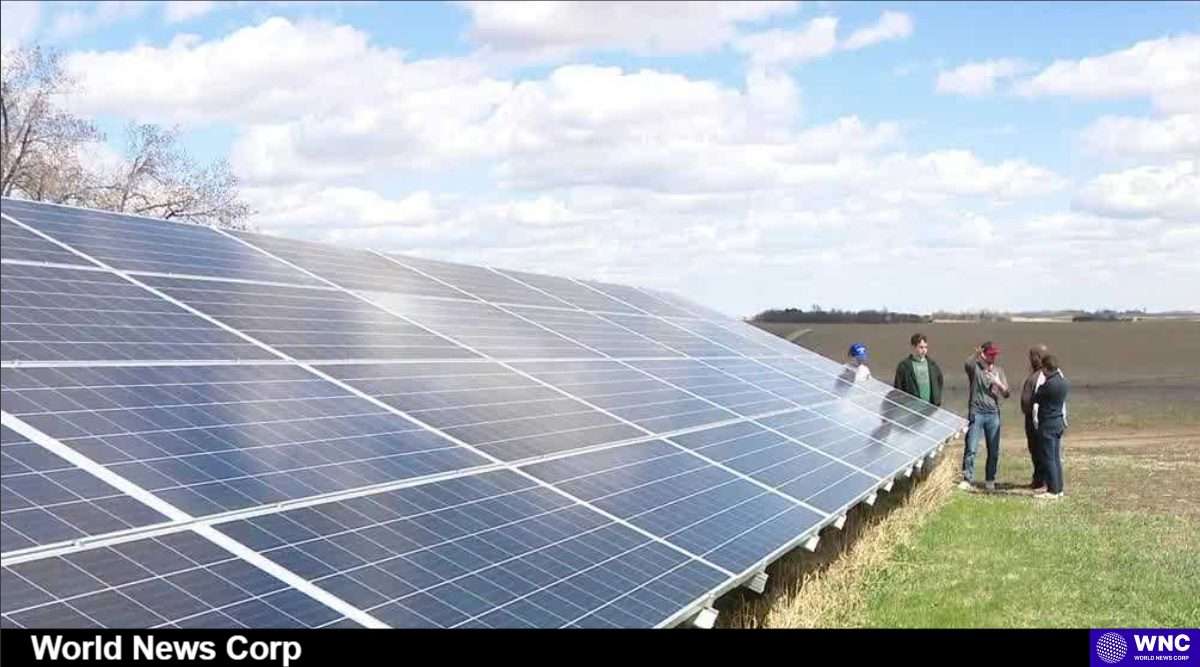
The landscape of American agriculture is changing, driven by innovative practices and a need for sustainability. Farmers like Graham Christensen, a fifth-generation farmer from Nebraska, are at the forefront of this transformation. His farm, situated near Oakland, utilizes a 20 kilowatt solar array, which powers 65% of their operations. It’s not just about keeping the lights on; it’s about economic survival in a competitive market. The key to Christensen’s success? The 30% federal tax credit for renewable energy investments.
How does solar energy transform agriculture?
Before investing in solar energy, Christensen faced monthly utility bills soaring between $400 to $700. Now, those bills rarely exceed $100. He credits the tax credit for making this transition possible. “Our bills before this would have been anywhere from $400 to $700 a month,” he recalls. “Now we’re seeing bills that are typically under 100 bucks.” This significant reduction in costs allows farmers to allocate resources to other areas, such as improving crop yields or investing in more sustainable practices.
This trend isn’t isolated to just one farm. Many farmers across the nation are beginning to see the value of solar energy and other renewable sources. By implementing these technologies, farmers not only save on energy costs but also contribute to the overarching goal of reducing carbon footprints. Additionally, with the ongoing discussions in Congress about protecting renewable energy tax credits, farmers like Christensen are advocating for continued support to ensure that these programs remain intact.
The Role of Tax Credits in Regenerative Agriculture
Christensen’s commitment goes beyond solar panels. He is a strong proponent of regenerative agriculture and precision farming, leveraging data and technology to optimize water usage. With the help of underground probes, he can determine precisely when to irrigate, thus conserving water. “We know precisely when to turn on the water, therefore not over using water,” he explains. This method not only preserves a vital resource but also enhances crop resilience in the face of climate variability.
The Renewable Energy Tax Credit is pivotal for farmers looking to adopt similar practices. It empowers them to invest in innovative technologies that can lead to long-term sustainability. As Christensen says, “We’ll be able to get a leg up as a small or mid-sized business, so that we have a chance to be competitive…” The ability to pass on a debt-free farm to the next generation is not just a financial goal but a legacy.
The Legislative Landscape and Local Support
The ongoing push by conservative groups, including representatives from U.S. Representative Don Bacon’s office, highlights the importance of these tax credits. Brian Martinez from the American Conservation Coalition noted, “Seeing firsthand tax credits at work, energy investments at work, that’s incredible to see.” With bipartisan support, there’s a growing understanding that these tax credits benefit not just individual farmers but entire rural communities.
The upcoming Federal Farm Bill discussions are crucial. Farmers like Christensen have rallied support to ensure conservation programs remain funded, and National Weather Service balloon launches are restored. The rationale is simple: better data leads to better farming practices, especially in a climate that is becoming increasingly unpredictable. As Christensen states, “When we start taking away some of the routes of balloons, you have bigger areas that are not being covered,” emphasizing the necessity of comprehensive weather data.
Conclusion: A Call for Action
In conclusion, the fate of renewable energy tax credits hangs in the balance. As farmers continue to demonstrate the tangible benefits of these programs, it’s vital for legislators to recognize their importance. Christensen’s story is just one of many that exemplifies how federal support can lead to sustainable practices and economic viability in agriculture. As we move forward, let’s advocate for policies that empower farmers to innovate and thrive sustainably. The future of farming depends on it.