
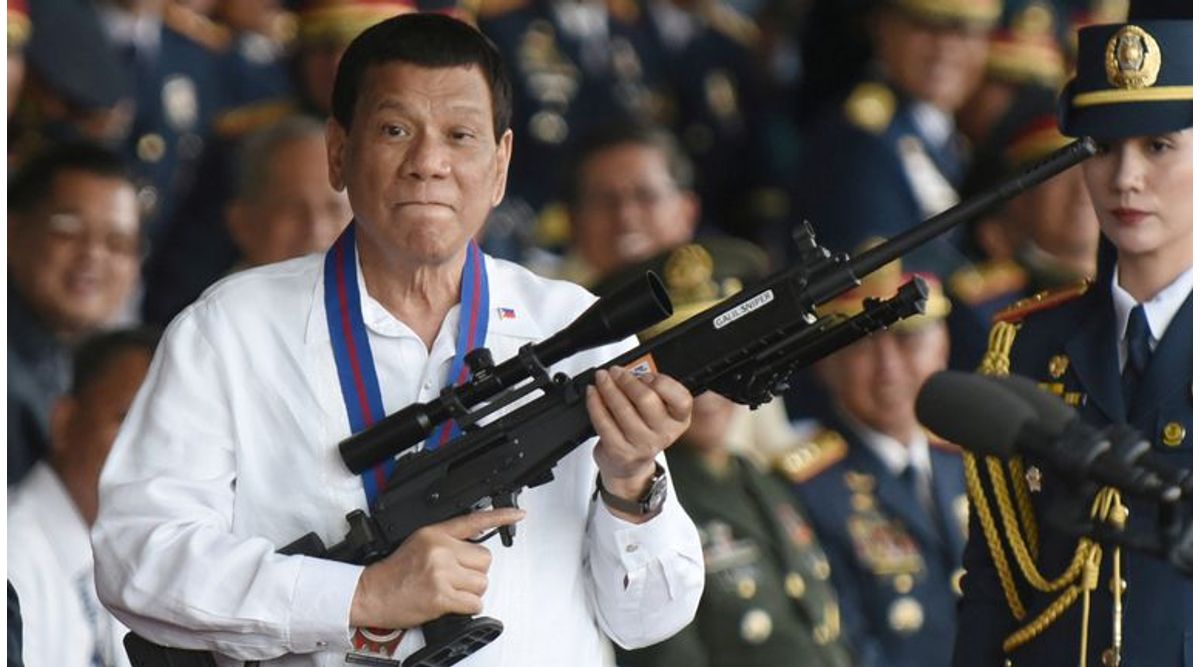
On a fateful Tuesday, the Philippines witnessed a significant event as former president Rodrigo Duterte was arrested at Manila airport. This landmark moment came after the International Criminal Court (ICC) issued a warrant for his arrest, accusing him of crimes against humanity related to his ruthless "war on drugs" that spanned from 2011 to 2022. With thousands of deaths linked to his administration's policies, many see this arrest as a crucial step toward accountability for the victims and their families.
Duterte's presidency was marked by a controversial approach to crime, particularly drug-related offenses. He rose to power in 2016, promising to eradicate drugs by any means necessary. His administration's tactics, however, have been widely criticized for leading to extrajudicial killings. According to police data, over 6,000 deaths were reported, but human rights organizations argue that the real number could be significantly higher. In essence, Duterte’s policies were a double-edged sword; while they may have reduced some crime rates, they also resulted in widespread abuse and loss of innocent lives.
As the news of his arrest spread, Duterte's supporters rallied around him, claiming the warrant was unlawful since the Philippines had withdrawn from the ICC in 2019. However, the ICC maintains that it retains jurisdiction over crimes committed during the period of membership. Duterte himself questioned the legitimacy of the charges, stating, "What is the law and what is the crime that I committed?" This rhetoric resonates with his long-standing defiance against international scrutiny.
The arrest of Duterte marks not only a personal turning point for the former president but also a pivotal moment in Philippine history. Political analysts suggest that this could signify a shift towards stronger rule of law and accountability in a country where impunity has long been a concern. Richard Heydarian, a Filipino political scientist, describes this moment as the "beginning of a new chapter in Philippine history," emphasizing the importance of upholding human rights.
Moreover, the implications extend beyond Duterte himself. His arrest could reshape the political landscape in the Philippines, especially as his daughter, Sara Duterte, has been positioned as a potential presidential candidate for the future. The current president, Ferdinand Marcos Jr., initially resisted cooperation with the ICC. However, the dynamics have shifted, and it appears that the Marcos administration may be distancing itself from the Duterte legacy.
As the world watches closely, the question remains: will this arrest lead to genuine accountability for the atrocities committed during Duterte's presidency? Activists and human rights organizations are hopeful, viewing this as a historic moment that could pave the way for justice. They argue that no one should be above the law, especially those in power. This arrest is a crucial step forward, demonstrating that the quest for justice in the Philippines is far from over. The journey ahead will be watched not just by Filipinos but by international communities invested in human rights and justice for all.