

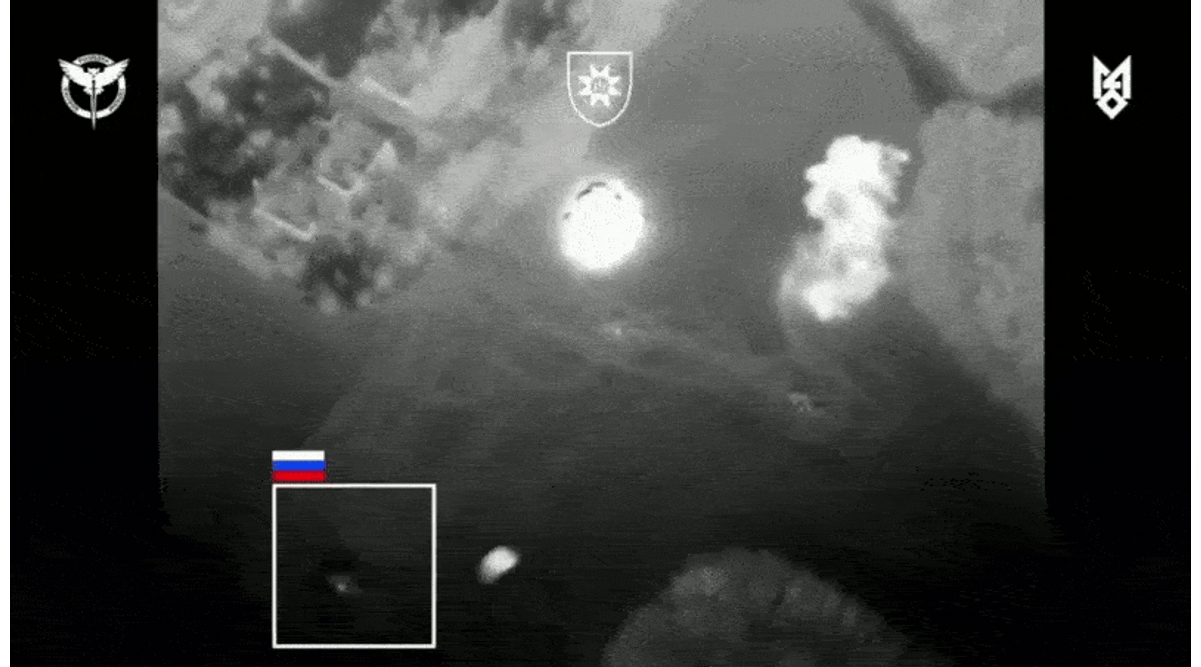
In a striking display of tactical prowess, Ukraine’s special forces have demonstrated the lethal capabilities of the HIMARS (High Mobility Artillery Rocket System) by successfully targeting and destroying four Russian helicopters deep within Belgorod, Russia. This operation represents not just a military victory but also a significant psychological blow to Russian forces. The attack, which took place shortly before high-stakes peace talks in Saudi Arabia, underscores the ongoing intensity of the conflict and the evolving strategies employed by both sides.
How has the deployment of HIMARS (High Mobility Artillery Rocket System) influenced modern battlefield dynamics, particularly in terms of precision strikes, mobility, and strategic advantage during recent conflicts?
Recent reports indicate that two Mi-8 transport helicopters and two Ka-52 gunships were engaged by Ukrainian forces using precision-guided munitions. According to the special operations command, the strikes were executed with remarkable accuracy, employing four M30 rockets that unleashed a devastating hail of tungsten fragments from as much as 57 miles away. This level of precision not only highlights the effectiveness of the HIMARS system but also the critical role of intelligence in modern warfare.
A Game-Changer in the Battlefield
The HIMARS system, supplied by the United States, has often been a focal point in Ukraine’s artillery strategy. With its ability to strike targets far behind enemy lines, it has changed the dynamics of the battlefield, allowing Ukrainian forces to engage in operations that were previously thought unattainable. The footage released by Ukrainian special forces showing the helicopters being destroyed in rapid succession serves as both a warning and a statement of intent: Ukraine is capable of reaching deep into Russian territory, challenging the notion of safe zones for enemy forces.
The Broader Context: Revenge and Resilience
This operation is particularly poignant as it comes a year after a similar attack on Ukrainian helicopters, which resulted in the loss of lives and equipment. It is a stark reminder of the ongoing cycle of retribution that characterizes this conflict. The broader Belgorod campaign, marked by small-scale raids and strategic strikes, has been reported to result in modest territorial gains for Ukraine, taking advantage of communication and coordination failures within Russian ranks.
Civilian Impact and International Dynamics
Despite these military achievements, the conflict continues to take a heavy toll on civilians, as evidenced by the recent missile attack in Sumy, injuring 88 individuals, including children. Ukrainian Foreign Minister Adrii Sybiha’s statement underscores the urgency for Russia to cease its bombardments and pursue genuine peace negotiations. However, diplomatic efforts have been hampered by ongoing hostilities, with no ceasefire agreement reached even after discussions in Saudi Arabia.
The Future of the Conflict: Tensions and Talks
As both nations navigate this complex landscape, the use of advanced weaponry and strategic operations like the HIMARS strikes will likely define future engagements. With ongoing talks aimed at establishing a ceasefire and ensuring maritime safety in the Black Sea, the stakes remain high. Ukrainian forces, emboldened by their recent successes, are positioning themselves to continue this momentum, while Russian forces must reassess their defensive strategies in light of these developments. The conflict is far from over, and as we move forward, the international community watches closely, hoping for a resolution that prioritizes peace over further escalation.