

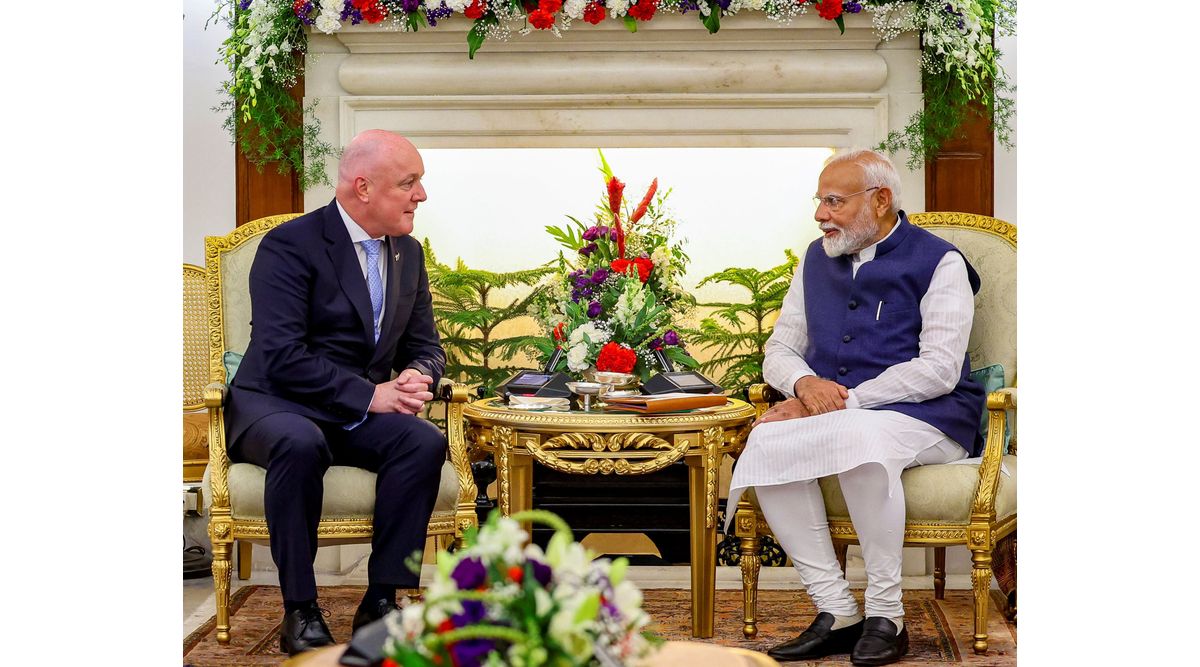
The Indo-Pacific region is rapidly becoming the focal point of global geopolitics, and India is emerging as a key player in this dynamic landscape. Recently, New Zealand Prime Minister Christopher Luxon emphasized India’s significant role during his keynote address at the Raisina Dialogue in New Delhi. His words echoed the growing consensus that India’s size and strategic importance are crucial for maintaining a rules-based order in a multi-polar world.
Why does India play a crucial role in the Indo-Pacific region in terms of geopolitics, trade, and security?
Luxon highlighted the need for countries in the Indo-Pacific to be free from interference and to choose their paths independently. This is particularly relevant as China’s assertiveness in the region raises concerns among its neighbors. India, with its democratic values and commitment to international law, stands as a counterbalance to such dominance. Luxon’s assertion that “there is no prosperity without security” underlines the interconnectedness of economic growth and geopolitical stability in the region.
New Zealand’s Role and Investment in Relationships
New Zealand is not just an observer in this evolving narrative; it is actively seeking to protect and advance its interests in the Indo-Pacific. The Kiwi leader expressed his government’s commitment to deepening ties with India, stating, “We can only do so alongside partners like India.” This collaborative spirit is essential for addressing shared challenges and ensuring that smaller nations can assert their rights and interests without undue pressure.
The Quad and Regional Cooperation
The Quad, comprising India, the USA, Japan, and Australia, has emerged as a crucial framework for promoting a free and open Indo-Pacific. Luxon acknowledged India’s pivotal contribution to the Quad, despite New Zealand’s decision not to join the coalition. Instead, New Zealand aims to enhance defense cooperation with like-minded countries, recognizing that shared values and objectives are vital for regional stability. This approach aligns with India’s vision of a cooperative and inclusive Indo-Pacific, where nations work together to uphold international norms.
A Joint Commitment to Peace and Stability
During discussions, Modi and Luxon reaffirmed their commitment to a stable and prosperous Indo-Pacific. They emphasized the importance of freedom of navigation and overflight, fundamental principles enshrined in the United Nations Convention on the Law of the Sea (UNCLOS). This commitment is crucial as both nations navigate the complexities of maritime security and regional disputes. The collaborative efforts between India and New Zealand can serve as a model for other countries, demonstrating how partnerships can lead to effective solutions in a challenging geopolitical environment.
Looking Ahead: The Future of Indo-Pacific Relations
As we look to the future, the relationship between India and New Zealand will likely deepen, driven by shared interests and mutual respect. The Raisina Dialogue serves as a platform for fostering these connections, bringing together leaders and thinkers to discuss pressing global issues. In an era marked by uncertainty, the message from Luxon and Modi is clear: cooperation is essential for navigating the challenges ahead and ensuring a peaceful, rules-based order in the Indo-Pacific. Countries must come together, advancing their respective interests while respecting the sovereignty and territorial integrity of all nations involved.