
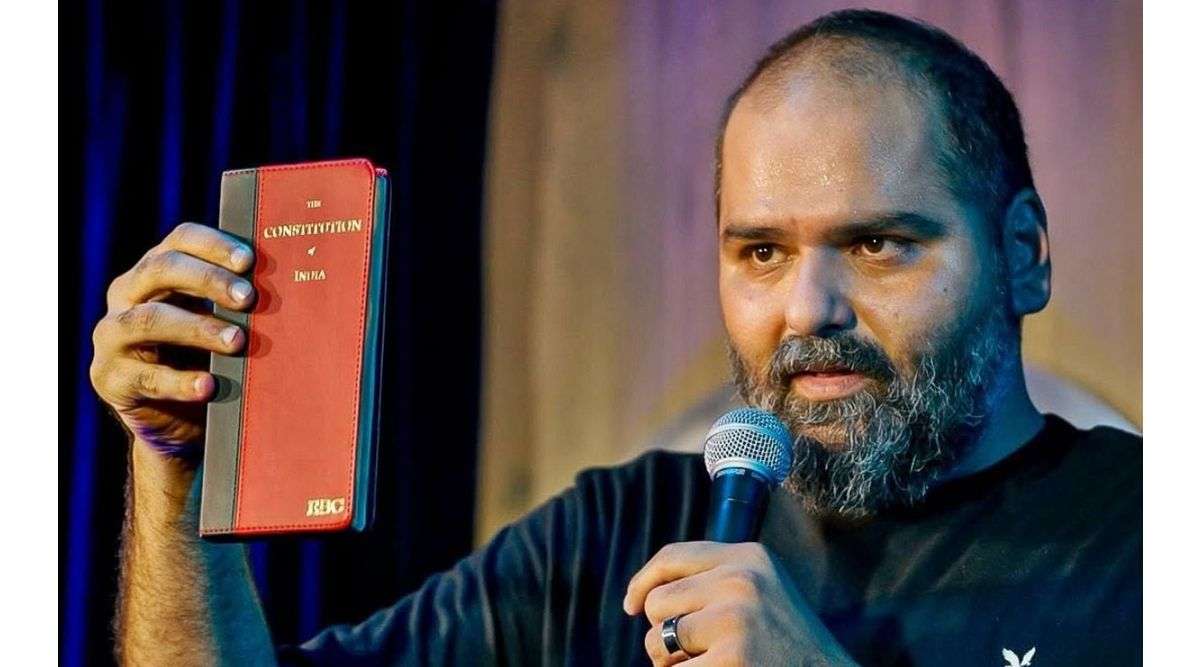
In a shocking turn of events, comedian Kunal Kamra is at the center of controversy after his recent stand-up show targeting Maharashtra’s Deputy Chief Minister, Eknath Shinde. Kamra’s jokes, which included terms like ‘gaddar’ (traitor), have sparked a fierce backlash from Shiv Sena supporters, leading to vandalism at the venue where the show was filmed. This incident raises critical questions about the intersections of comedy, political expression, and the boundaries of free speech in India.
Why is it important to understand the context of the controversy when analyzing a public debate or historical event?
Kamra’s performance included a parody of a popular Bollywood song, which he used to ridicule Shinde, a politician known for his controversial role in the Maharashtra government. The timing of Kamra’s remarks coincided with heightened political tensions in the state, particularly following Shinde’s leadership change in 2022 that led to the fall of Uddhav Thackeray’s government. Such political dynamics add layers to how audiences interpret Kamra’s humor, often seen as a reflection of the current political climate.
The Fallout from the Show
In response to Kamra’s jokes, a group of Shiv Sena workers vandalized the Habitat studio in Mumbai, where the show was recorded. The studio announced its closure, citing safety concerns and the challenges of hosting performances without risking retaliation. Kamra himself took to social media, emphasizing that the studio should not be held accountable for his comedic content. He stated, “Attacking a venue for a comedian’s words is as senseless as overturning a lorry carrying tomatoes, because you didn’t like the butter chicken you were served.”
Legal Implications and Political Reactions
The Mumbai Police have initiated an investigation to determine whether Kamra’s jokes were part of a larger conspiracy and if he was financially supported in his satire against Shinde. This scrutiny has raised alarms about the potential consequences of political satire in India. The charges against Kamra include defamation and statements conducing to public mischief, which, under Indian law, can lead to significant penalties.
Political figures have expressed differing views on the matter. Former Chief Minister Uddhav Thackeray defended Kamra, suggesting that his remarks were truthful reflections of political realities. In contrast, current officials have criticized Kamra’s approach, asserting that freedom of expression does not grant individuals the liberty to insult public figures without consequence.
The Broader Implications for Comedy
This incident is emblematic of a larger trend in which comedians and artists find themselves navigating a precarious landscape. The clash between creative expression and political sensitivities is not new, but it has intensified in recent years, especially in the context of India’s vibrant yet volatile political environment. As a society, we must consider the role of humor in political discourse. Can comedy serve as a tool for accountability, or does it simply fuel further division?
Conclusion: The Future of Political Satire
As the investigation unfolds and Kamra prepares to cooperate with authorities, the future of political satire in India hangs in the balance. This case poses critical questions about the limits of free speech and artistic expression. Will comedians like Kamra continue to push boundaries, or will fear of political repercussions stifle their voices? The answer to this question will shape the landscape of Indian comedy and political commentary for years to come.