
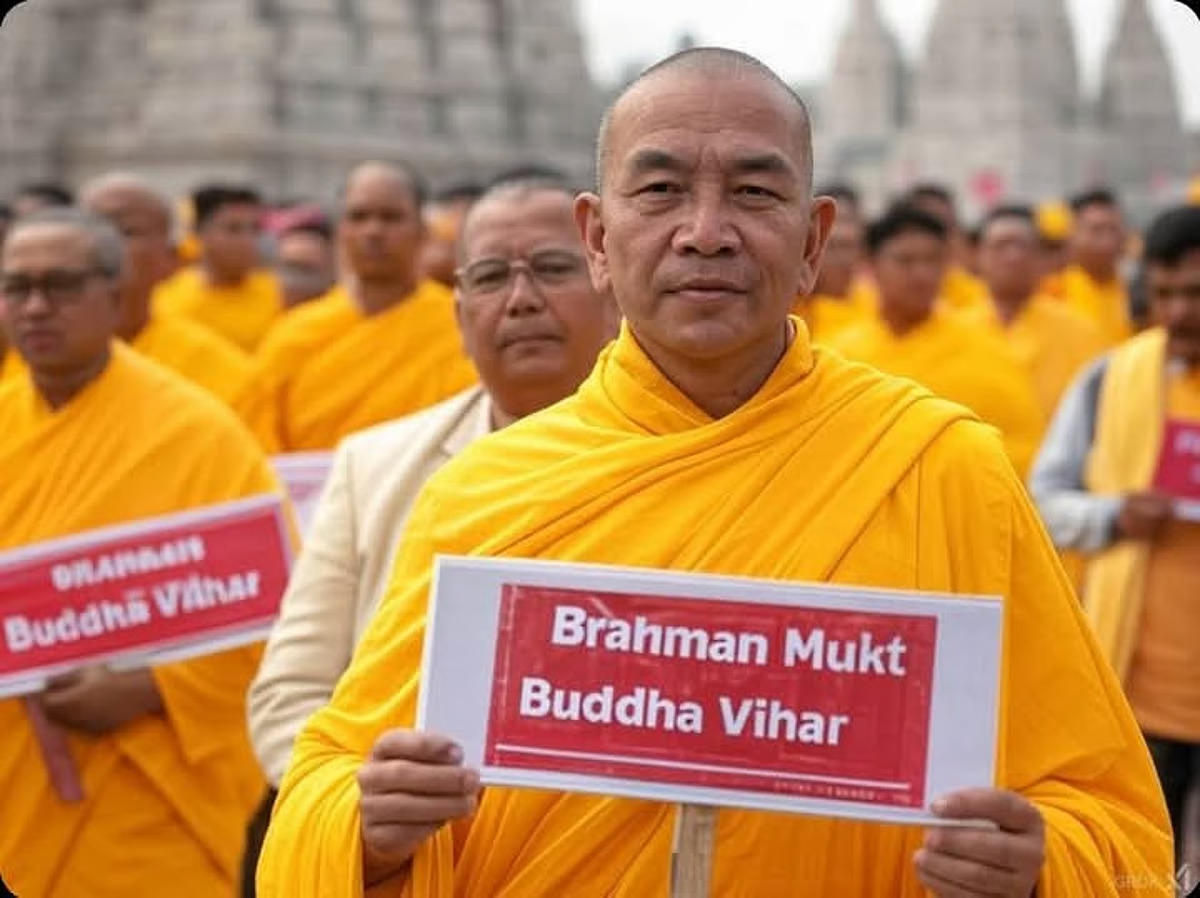
The Mahabodhi Temple in Bodh Gaya, Bihar, stands as a cornerstone of Buddhist heritage, marking the very location where Gautama Buddha attained enlightenment. Yet, this revered site is currently embroiled in a struggle for administrative control, with a significant portion of its management held by non-Buddhists. This situation has sparked a 14-day-long hunger strike initiated by Buddhist monks and followers, demanding full control of the temple, highlighting the ongoing tensions between the Buddhist community and the prevailing management structure established under the Bodh Gaya Temple Act of 1949.
What are The Historical Significance of Mahabodhi Temple ?
Originally built by Emperor Ashoka in the 3rd century BCE, the Mahabodhi Temple has seen its share of trials. After facing destruction in the 12th century due to invasions, it was revitalized through the efforts of Anagarika Dharmapala, a Sri Lankan Buddhist reformer. Today, it holds a UNESCO World Heritage designation, celebrated not only for its historical and cultural significance but also as a pilgrimage site for millions. However, the current management structure, which includes a nine-member Bodhgaya Temple Management Committee (BTMC), raises questions about representation and autonomy. With only four members from the Buddhist community and the remaining five—including a government-appointed District Magistrate as chairman—Buddhists argue that their voices are stifled in matters concerning their sacred site.
The Call for Change
The protestors, representing over 500 organizations worldwide, are not just demanding administrative control; they are also calling for the repeal of the Bodh Gaya Temple Act of 1949 and an end to state interference in Buddhist religious affairs. These demands stem from grievances about mismanagement, alleged corruption involving donations, and the appropriation of Buddhist heritage, which protestors describe as systematic distortions of their history. For instance, there have been accusations of mismanagement regarding donations and the mistreatment of pilgrims, as well as claims that Hindu symbols have been introduced inappropriately to the site—a move seen as an attempt to ‘Hinduize’ this historically Buddhist place.
Support From the Global Community
This hunger strike, initiated on February 12, has not only garnered national attention but also international support from Buddhist communities across the globe, including Sri Lanka, Thailand, and the United States. A petition titled “In Solidarity: Demand Buddhist Control Over the Mahabodhi Temple” has already collected over 5,000 signatures, as Buddhists worldwide rally behind the cause. The growing pressure on the Indian government to address these concerns is palpable, yet there remains a lack of response from officials, leading to frustrations among the protestors.
The Intersection of Politics and Faith
With elections approaching in Bihar, the Buddhist community is making it clear that if their demands remain unaddressed, they will vote against the Nitish Kumar government. Leaders of the movement, such as Dr. Vilas Kharat, have emphasized the need for dialogue, stating, “Our fast will continue until our demands are met. If sacrificing our lives can save the identity of our nation, we are ready for it.” This sentiment resonates deeply among the protestors, who feel they are not only fighting for control of a temple but also for recognition and respect for their religious identity.
Conclusion: A Fight for Autonomy
As the hunger strike continues, the battle for the Mahabodhi Temple highlights broader issues of representation, autonomy, and respect for cultural heritage in India. The temple is more than just a site of worship; it represents the essence of Buddhism and its historical significance. The ongoing protests serve as a reminder that the voices of the Buddhist community must be heard and respected in the management of their sacred spaces. It is a call for justice and recognition that resonates far beyond the borders of India, urging Buddhists worldwide to unite in support of the Mahabodhi Temple’s rightful administration.