

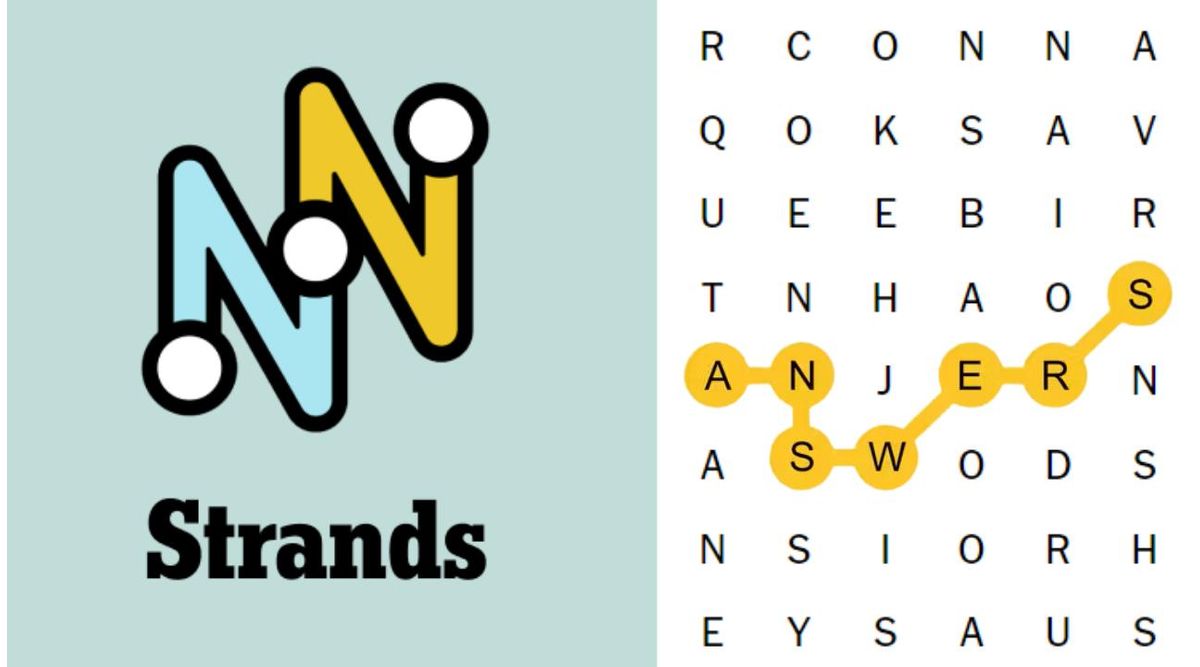
When you think of wordplay, spoonerisms often come to mind. This delightful twist of language involves swapping the initial sounds of two words, creating a humorous result. For example, ‘crushing blow’ becomes ‘blushing crow’. Today, we dive into the world of spoonerisms through the lens of the New York Times Strands puzzle, a game that has captured the attention of many puzzle enthusiasts.
What are spoonerisms, and how do they impact language and humor?
A spoonerism is named after Reverend William Archibald Spooner, who was known for his verbal slips. These amusing linguistic mishaps are not just entertaining; they also provide insight into the playful nature of language. In the recent NYT Strands puzzle, the theme was aptly titled “Sound switching,” inviting players to uncover words that fit this amusing category.
As I attempted the puzzle, I found myself puzzled over the theme. It wasn’t until I discovered the spangram, ‘SPOONERISMS’, that everything clicked into place. The puzzle challenges players to think outside the box and engage with language in a fun way. It’s a reminder that words can be both playful and profound.
The Challenge of NYT Strands
The NYT Strands puzzle is not your typical word search. Each day, a new theme emerges, and players must identify words that fit that theme. For instance, on March 17, 2025, the theme centered around sound switching. Hints included whimsical phrases that had been transformed through spoonerisms. The goal is to find all hidden words, including a spangram that spans across the grid.
What I particularly love about Strands is how it prompts you to think differently. While some players may breeze through, others might find themselves stuck on a single word. The satisfaction of finally uncovering a hidden phrase can be exhilarating. It’s like finding a treasure in a sea of letters.
Real-World Applications of Spoonerisms
Spoonerisms aren’t just confined to puzzles and games; they also appear in literature and popular culture. Authors and comedians often use them to create humor and engage audiences. For example, in the classic children’s book “The Cat in the Hat,” Dr. Seuss employs playful language that brings joy to readers of all ages. By incorporating spoonerisms, he adds an extra layer of fun to his storytelling.
Similarly, comedians utilize spoonerisms to elicit laughter from their audiences. The unpredictability of swapped sounds creates a delightful surprise, prompting a chuckle or a laugh. As we navigate through our daily lives, it’s fun to sprinkle in some playful wordplay. It invites lightheartedness and creativity into our conversations.
Tips for Solving Strands Puzzles
If you’re new to NYT Strands or looking to improve your skills, here are a few tips. First, familiarize yourself with common themes and word patterns. Understanding what clues to look for can save you valuable time. Secondly, don’t hesitate to use hints if you’re stuck. Sometimes, a small nudge can lead you to the right answer. Lastly, enjoy the process! The primary goal is to have fun while engaging with language.
In conclusion, the world of spoonerisms is a fascinating one, filled with laughter and creativity. Whether you’re playing the NYT Strands puzzle or simply enjoying a good pun, remember that language is meant to be playful. So, the next time you encounter a spoonerism, take a moment to appreciate the joy it brings. And who knows, it may just inspire you to create your own!