

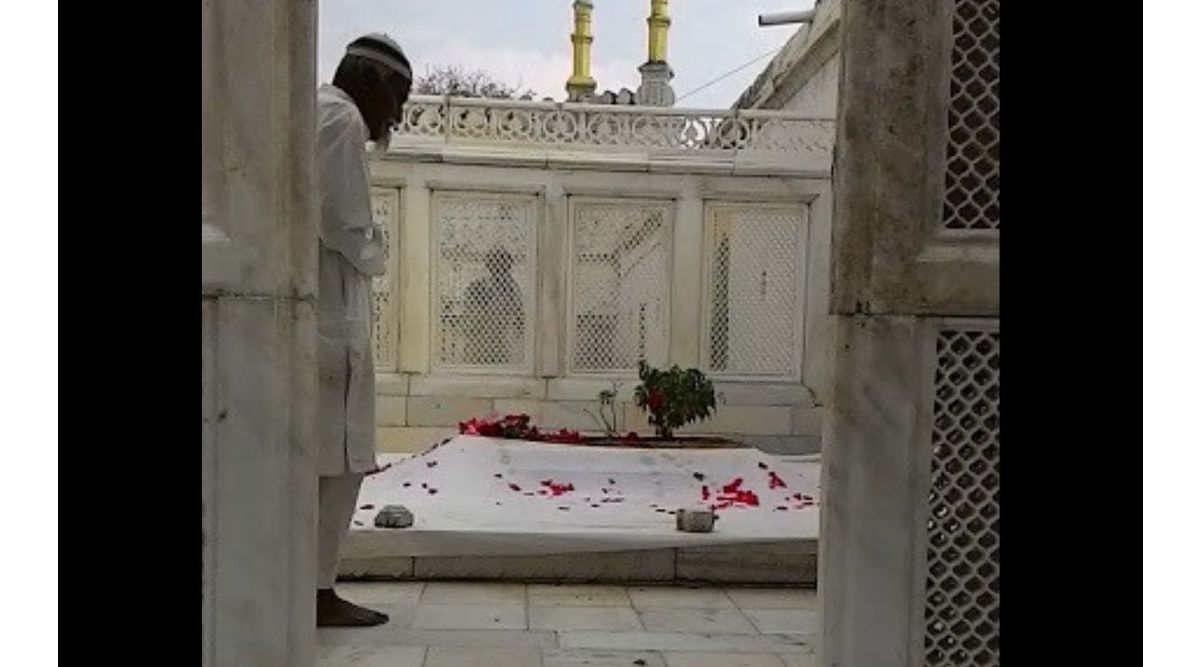
The tomb of Mughal emperor Aurangzeb in Khuldabad, Maharashtra, has become a focal point of heated political debate, reigniting discussions about historical narratives and cultural identity. Recently, Maharashtra’s Chief Minister Devendra Fadnavis backed demands for the tomb’s demolition, stating that any action must adhere to legal frameworks because the site is protected under the Archaeological Society of India (ASI). This statement has stirred up long-standing sentiments related to Aurangzeb’s legacy, particularly among those who see him as an adversary of the Maratha empire.
How does historical context shape the legacy of an event?
Aurangzeb, who ruled for over 49 years, is often depicted as a harsh ruler in Marathi folklore. His conflicts with the Marathas, especially the capture and execution of Chhatrapati Sambhaji Maharaj, have solidified his reputation as a figure of oppression. The recent release of the movie Chhava, which graphically portrays Sambhaji’s torture, has reignited public interest and controversy surrounding Aurangzeb’s reign. In Maharashtra, where Maratha pride runs deep, Aurangzeb is often viewed as a historical antagonist. Yet, some, like Samajwadi Party MLA Abu Azmi, have argued that Aurangzeb was a capable administrator who contributed to the construction of temples and should not be solely remembered for his conflicts with the Marathas.
Political Ramifications
The political landscape in Maharashtra has seen fresh calls for the demolition of Aurangzeb’s tomb, particularly from leaders of the BJP, who argue that it glorifies a figure viewed negatively in Maratha history. Udayanraje Bhosale, a descendant of Shivaji Maharaj, has been vocal about the need to erase Aurangzeb’s legacy from the state’s cultural memory. His comments reflect a broader trend where historical narratives are being reshaped to align with present-day political agendas. This controversy also highlights a growing schism in how different communities relate to historical figures, with many Muslim politicians urging their constituents to distance themselves from Aurangzeb’s legacy.
Public Sentiment
Public opinion on this issue is deeply divided. While many support the calls for demolition as a means of reclaiming Maratha pride, others see it as an attack on historical complexity. Some community leaders argue against the politicization of history, emphasizing that figures like Aurangzeb cannot be simply categorized as villains or heroes. The tomb itself, which is a simple structure surrounded by a marble grill, stands as a reminder of India’s complex Mughal past. It is essential to consider the implications of such a demolition—not just for historical preservation, but also for contemporary communal relations in Maharashtra.
Conclusion: Navigating History and Identity
As we contemplate the future of Aurangzeb’s tomb, we must grapple with the larger questions of how history is remembered and honored. The tomb, while a site of contention, also serves as a testament to the intricate tapestry of Indian history. Engaging with this history requires a nuanced understanding of the past that goes beyond mere destruction or veneration. In a society grappling with identity and cultural heritage, the tomb stands as a symbol of the ongoing struggle to reconcile historical narratives with modern realities. As discussions continue, it will be crucial for all stakeholders to engage in a dialogue that respects both history and the diverse perspectives of the communities involved.